Jørgen Randers
Professor Emeritus
Department of Law and Governance
Professor Emeritus
Department of Law and Governance
Article Per Espen Stoknes, Iulie Aslaksen, Ulrich Goluke, Jørgen Randers, Per Arild Garnåsjordet (2023)
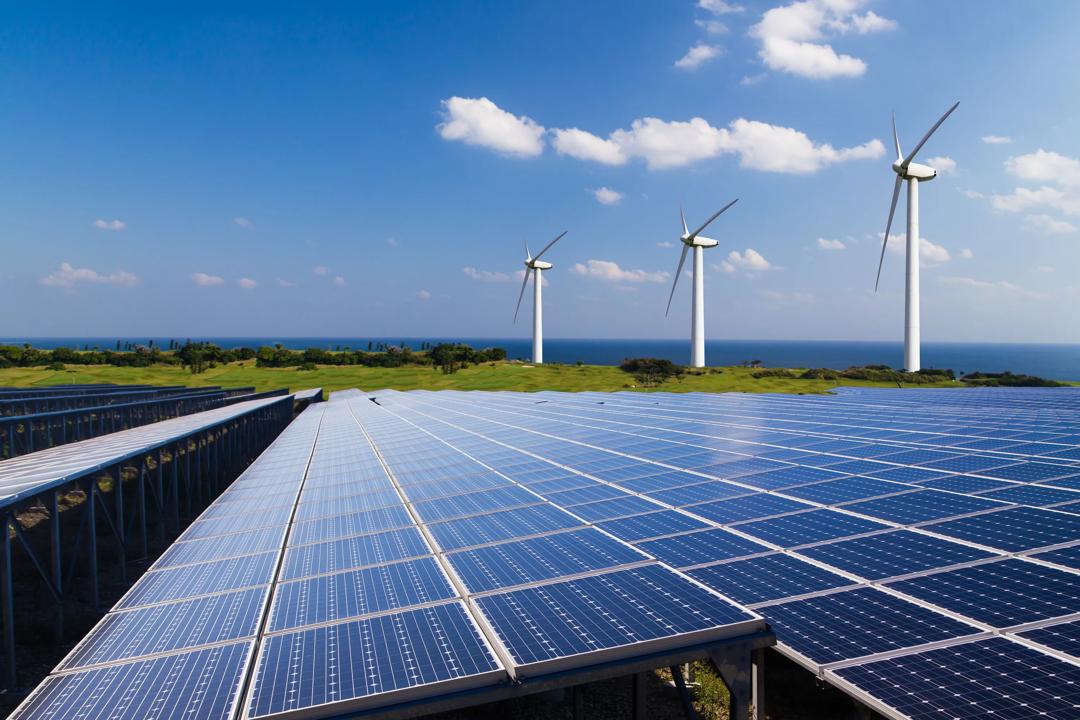
The global energy transition from fossil to low-carbon energy challenges the future of the Norwegian petroleum sector, a major factor in the country's economy, now facing financial climate risk and long-term declining demand, particularly for gas to the EU. What energy policies can assist transition into a low-carbon society? We explore three investment scenarios for the Norwegian offshore energy sector from 2020 to 2070: 1) Business as usual, 2) Increasing cash-flow by harvesting existing petroleum fields and cutting investments (Harvest-and-Exit), or 3) Rebuilding with green offshore energy investments. In a new economic model, we compare impacts on key macro- and sector-economic variables. We find that rebuilding by investing moderately in green offshore energy production could reverse the extra job decline that a quicker phase-out of petroleum investments would incur. The impacts on the Norwegian sovereign wealth fund - Government Pension Fund Global - and on gross domestic product (GDP) per capita are insignificant to 2050 and positive by 2070. The simulated investments and economic results can be compared with observations to constitute forward-looking indicators for energy transitioning in producer countries.
Article David Collste, Sarah E. Cornell, Jørgen Randers, Johan Rockström, Per Espen Stoknes (2021)
Transformation of the world towards sustainability in line with the 2030 Agenda requires progress on multiple dimensions of human well-being. We track development of relevant indicators for Sustainable Development Goals (SDGs) 1–7 against gross domestic product (GDP) per person in seven world regions and the world as a whole. Across the regions, we find uniform development patterns where SDGs 1–7 – and therefore main human needs – are achieved at around US$15,000 measured in 2011 US$ purchasing power parity (PPP).
Article Jørgen Randers, Ulrich Golüke (2020)
The risk of points-of-no-return, which, once surpassed lock the world into new dynamics, have been discussed for decades. Recently, there have been warnings that some of these tipping points are coming closer and are too dangerous to be disregarded. In this paper we report that in the ESCIMO climate model the world is already past a point-of-no-return for global warming. In ESCIMO we observe self-sustained thawing of the permafrost for hundreds of years, even if global society stops all emissions of man-made GHGs immediately. We encourage other model builders to explore our discovery in their (bigger) models, and report on their findings. The thawing (in ESCIMO) is the result of a continuing self-sustained rise in the global temperature. This warming is the combined effect of three physical processes: (1) declining surface albedo (driven by melting of the Arctic ice cover), (2) increasing amounts of water vapour in the atmosphere (driven by higher temperatures), and (3) changes in the concentrations of the GHG in the atmosphere (driven by the absorption of CO2 in biomass and oceans, and emission of carbon (CH4 and CO2) from thawing permafrost). This self-sustained, in the sense of no further GHG emissions, thawing process (in ESCIMO) is a causally determined, physical process that evolves over time. It starts with the man-made warming up to the 1950s, leading to a rise in the amount of water vapour in the atmosphere—further lifting the temperature, causing increasing release of carbon from thawing permafrost, and simultaneously a decline in the surface albedo as the ice and snow covers melts. To stop the self-sustained warming in ESCIMO, enormous amounts of CO2 have to be extracted from the atmosphere.
Article Jørgen Randers, Johan Rockström, Per Espen Stoknes, Ulrich Golüke, David Collste, Sarah E. Cornell, Jonathan F. Donges (2019)
The world agreed to achieve 17 Sustainable Development Goals by 2030. Nine planetary boundaries set an upper limit to Earth system impacts of human activity in the long run. Conventional efforts to achieve the 14 socio-economic goals will raise pressure on planetary boundaries, moving the world away from the three environmental SDGs. We have created a simple model, Earth3, to measure how much environmental damage follows from achievement of the 14 socio-economic goals, and we propose an index to track effects on people's wellbeing. Extraordinary efforts will be needed to achieve all SDGs within planetary boundaries.
Article Jørgen Randers (2019)
Article Jørgen Randers (2016)
Article Jørgen Randers, Ulrich Göluke, Fred Wenstøp, Søren Wenstøp (2016)
We have made a simple system dynamics model, ESCIMO (Earth System Climate Interpretable Model), which runs on a desktop computer in seconds and is able to reproduce the main output from more complex climate models. ESCIMO represents the main causal mechanisms at work in the Earth system and is able to reproduce the broad outline of climate history from 1850 to 2015. We have run many simulations with ESCIMO to 2100 and beyond. In this paper we present the effects of introducing in 2015 six possible global policy interventions that cost around USD 1000 billion per year – around 1 % of world GDP. We tentatively conclude (a) that these policy interventions can at most reduce the global mean surface temperature – GMST – by up to 0.5 °C in 2050 and up to 1.0 °C in 2100 relative to no intervention. The exception is injection of aerosols into the stratosphere, which can reduce the GMST by more than 1.0 °C in a decade but creates other serious problems. We also conclude (b) that relatively cheap human intervention can keep global warming in this century below +2 °C relative to preindustrial times. Finally, we conclude (c) that run-away warming is unlikely to occur in this century but is likely to occur in the longer run. The ensuing warming is slow, however. In ESCIMO, it takes several hundred years to lift the GMST to +3 °C above preindustrial times through gradual self-reinforcing melting of the permafrost.
Anthology Jørgen Randers, Graeme Maxton (2016)
Article Jørgen Randers (2015)
Chapter Jørgen Randers (2014)
Article Jørgen Randers (2014)
Chapter Jørgen Randers (2013)
Article Jørgen Randers (2013)
Anthology Jørgen Randers (2013)
Article Jørgen Randers (2012)
Anthology Jørgen Randers (2012)
Editorial Jørgen Randers (2012)
Article Jørgen Randers (2012)
Anthology Jørgen Randers (2012)
Article Jørgen Randers (2011)
Article Jørgen Randers, Paul Gilding (2010)
Article Jørgen Randers (2008)
Article Jørgen Randers, Knut H. Alfsen (2007)
Article Arne Jon Isachsen, Jørgen Randers (2007)
Article Jørgen Randers, Ulrich Göluke (2007)
Article J. Loh, R. Green, T. Ricketts, J. Lamoreux, M. Jenkins, V. Kapos, Jørgen Randers (2005)
Article Jørgen Randers (2002)
Article Jørgen Randers (2000)
Feature article Jørgen Randers (2019)
Feature article Jørgen Randers, Thorvald Grung Moe (2019)
Participation in media Svein Harald Gullbekk, Jørgen Randers, Halfdan Bleken (2019)
Feature article Johan Rockström, Jørgen Randers, Per Espen Stoknes (2018)
Feature article Jørgen Randers (2018)
Feature article Jørgen Randers, Per Espen Stoknes (2018)
Interview Birger Ragnvald Sevaldson, Jørgen Randers (2018)
Interview Jørgen Randers (2017)
Interview Jørgen Randers (2016)
Feature article Jørgen Randers (2014)
Feature article Jørgen Randers (2013)
Feature article Jørgen Randers, Gunnar Sand (2013)
Feature article Jørgen Randers (2013)
Participation in media Jørgen Randers (2013)
Interview Jørgen Randers (2013)
Feature article Jørgen Randers (2012)
Feature article Jørgen Randers, Nils Anders Røkke (2012)
Feature article Jørgen Randers (2012)
Book Chandran Nair, Jørgen Randers, Jinfeng Zhou, Frederick Charles Dubee (2025)
Book Jørgen Randers, Till Kellerhoff (2024)
Journal Jørgen Randers, Ulrich Golüke (2021)
Article Per Espen Stoknes, Iulie Aslaksen, Ulrich Golüke, Jørgen Randers, Per Arild Garnåsjordet (2021)
The global energy transition from fossil to low-carbon energy challenges the future of the Norwegian petroleum sector, a major factor in the country’s economy, now facing financial climate risk and longterm declining demand, particularly for gas to the EU. What energy policies can assist the transition into a low-carbon society? We explore three investment scenarios for the Norwegian offshore energy sector from 2020 to 2070: 1) Business as usual, 2) Increasing cash-flow by harvesting existing petroleum fields and cutting investments (Harvest-and-Exit), or 3) Rebuilding with green offshore energy investments. In a new economic model, we compare impacts on key macro- and sectoreconomic variables. We find that investing moderately in green offshore energy production can reverse the extra job decline that a quicker phase-out of petroleum investments would incur. The impacts on the Norwegian sovereign wealth fund - Government Pension Fund Global - and on gross domestic product (GDP) per capita are insignificant to 2050 and positive by 2070. The simulated investments and economic results can be compared with observations to constitute forward-looking indicators of Norway's energy transitioning.
Introduction Jørgen Randers (2019)
Lecture Jørgen Randers (2019)
Article Jørgen Randers (2019)
Det er ikke én som må gjøre alt. Alle må gjøre litt. Individuelle initiativ er ikke nok. Her kreves kollektiv respons. Her er det ikke nok å gjøre sitt beste. Her må man gjøre det som trengs.
Report Per Espen Stoknes, Randers Jørgen, Johan Rockström, Jørgen Randers, Ulrich Golüke, David Collste, Sarah E. Cornell (2018)
If the world’s nations continue with the same efforts as in the recent decades we will not achieve SDGs by 2030, nor 2050. By 2030, in the business-as-usual scenario, the world’s success score on SDGs will be only 10 out of 17, up from 9 in 2015. The main problems are that satisfying the social SDGs with conventional policy tools will lead to very large human footprints in terms of resource use and pollution outputs, and to increasing inequity. The state of the Earth’s planetary boundaries (PBs) will be further in the red, high-risk zone particularly with regards to global warming, biodiversity loss, air pollution and toxic entities in nature. There is high risk for pushing the Earth’s life supporting systems beyond irreversible trigger-points by 2050.
Conference lecture Jørgen Randers, Ulrich Golüke, Beniamino Calegari (2018)
Conference lecture Jørgen Randers (2018)
Conference lecture Jørgen Randers, Ulrich Golüke, Beniamino Callegari (2017)
Book Ernst U. von Weizsäcker, Anders Wijkman, Jørgen Randers (2017)
Current worldwide trends are not sustainable. The Club of Rome’s warnings published in the book Limits to Growth are still valid. Remedies that are acceptable for the great majority tend to make things worse. We seem to be in a philosophical crisis. Pope Francis says it clearly: our common home is in deadly danger. Analyzing the philosophical crisis, the book comes to the conclusion that the world may need a “new enlightenment”; one that is not based solely on doctrine, but instead addresses a balance between humans and nature, as well as a balance between markets and the state, and the short versus long term. To do this we need to leave behind working in ”silos” in favor of a more systemic approach that will require us to rethink the organization of science and education. However, we have to act now; the world cannot wait until 7.6 billion people have struggled to reach a new enlightenment. This book is full of optimistic case studies and policy proposals that will lead us back to a trajectory of sustainability. But it is also necessary to address the taboo topic of population increase. Countries with a stable population fare immensely better than those with continued increase. Finally, we are presenting an optimistic book from the Club of Rome.
Article Jørgen Randers, Graeme Maxton (2017)
Article Jørgen Randers (2017)
Commentary Jørgen Randers (2015)
Book chapter Jørgen Randers (2015)
Article Jørgen Randers (2014)
Book chapter Jørgen Randers (2014)
Commentary Jørgen Randers (2013)
Report Daniel Rees, Marit Sjøvaag Marino, Jørgen Randers (2013)
Report Daniel Rees, Jørgen Randers (2013)
Conference lecture Jørgen Randers (2013)
Lecture Jørgen Randers (2013)
Conference lecture Jørgen Randers (2013)
Book chapter Jørgen Randers (2012)
Lecture Jørgen Randers (2012)
Working paper Marit Sjøvaag Marino, Nils Erik Bjørge, Torgeir Ericson, Per Arild Garnåsjordet, Håkon T Karlsen, Jørgen Randers, Daniel Rees (2012)
How can we evaluate whether national climate policies are sufficient? Which moral principles should be the basis of our policy efforts? The answers to these questions are central to the development of any climate policy framework, but not always made explicit in daily political discourse. In this article we seek to redress this imbalance through a survey of popular opinion in Norway.
Report Jørgen Randers, Steinar Bysveen, Sverre Aam (2010)
Report Jørgen Randers, Marit Sjøvaag Marino (2010)
Report Jørgen Randers (2010)
Report Jørgen Randers, Marit Sjøvaag Marino (2009)
Report Jørgen Randers (2009)
Report Jørgen Randers (2008)
Article Knut H. Alfsen, Jørgen Randers (2006)
Article Jørgen Randers (2005)
Report Jørgen Randers, Kristin Teien (2005)
Book Donella Meadows, Jørgen Randers, Dennis Meadows (2004)
Report Jørgen Randers (2004)
Report Jørgen Randers (2002)
Book Jørgen Randers, Jonathan Loh, Mathis Wackernagel, ukjent-for-g197204 a.o. (2000)
Conference lecture Jørgen Randers (2000)
| Year | Academic Department | Degree |
|---|---|---|
| 1973 | MIT Sloan School of Management | Ph.D. |
| 1968 | University of Oslo | Master Cand. Real |
| Year | Employer | Job Title |
|---|---|---|
| 2016 - Present | BI Norwegian Business School | Professor emeritus |
| 1985 - 2015 | BI Norwegian Business School | Professor |
| 1981 - 2013 | A large number of boards, councils and comittees | Member or chair |
| 1994 - 1999 | WWF International | Deputy Director General |
| 1990 - 1993 | Various Norwegian corporations | Board chair (full time) |
| 1981 - 1989 | BI Norwegian Business School | President |
| 1974 - 1980 | Resource Policy Group, NTNF | Founding director |
| 1970 - 1974 | MIT Sloan School of Management | Ph.D. student, then Assistant Professor |

BI Business Review
Climate change is moving faster than anticipated. An international team of scientists and economists is recommending five major turnarounds to create a better future.
BI Business Review
Improving human wellbeing on a finite planet creates significant new investment opportunities in eco-Infrastructure.
BI Business Review
Are the United Nations' Sustainable Development Goals really sustainable? The solution is found in five extraordinary new measures.
BI Business Review
Norway uses four times more money to increase the world's greenhouse gas emissions than it uses to lower emissions, claims Jørgen Randers, who keeps fighting for a sustainable world.
BI Business Review
Democratic society is stuck in a situation where the short term costs of climate action hinders meaningful action, writes Jørgen Randers.