The Smoke Catcher
How do you save one of Oslo’s most important climate initiatives when funding falls short and the market barely exists? For Jannicke Bjerkås, the answer was to rethink both leadership and business.
The carbon capture project at Klemetsrud was set to become one of Oslo’s most important climate initiatives. Then it was put on hold when the budget was projected to exceed its original estimate by NOK 3 billion.
To move the project forward, Jannicke Bjerkås had to help develop a business model in a market that barely existed.
The knowledge she gained from a leadership programme at BI would prove particularly valuable when facing challenges with no simple solutions or ready-made answers.
When the project encountered setbacks, Jannicke Bjerkås had to rethink her approach. The solution was not just about technology, but about making emissions reductions commercially viable.
Technology was only half the challenge
Klemetsrud is home to the waste incineration plant responsible for 17 per cent of Oslo’s CO₂ emissions. Capturing carbon at the facility is therefore an important measure in helping the City of Oslo achieve its climate targets.
But the challenge is not just technological. How do you finance a project designed to capture and store hundreds of thousands of tonnes of CO₂ when the market for a key part of the service barely exists?
For Jannicke Bjerkås, who has led Hafslund Celsio’s carbon capture project since 2018, the challenge involved much more than getting the project back on track. She also had to help find a new commercial way forward.
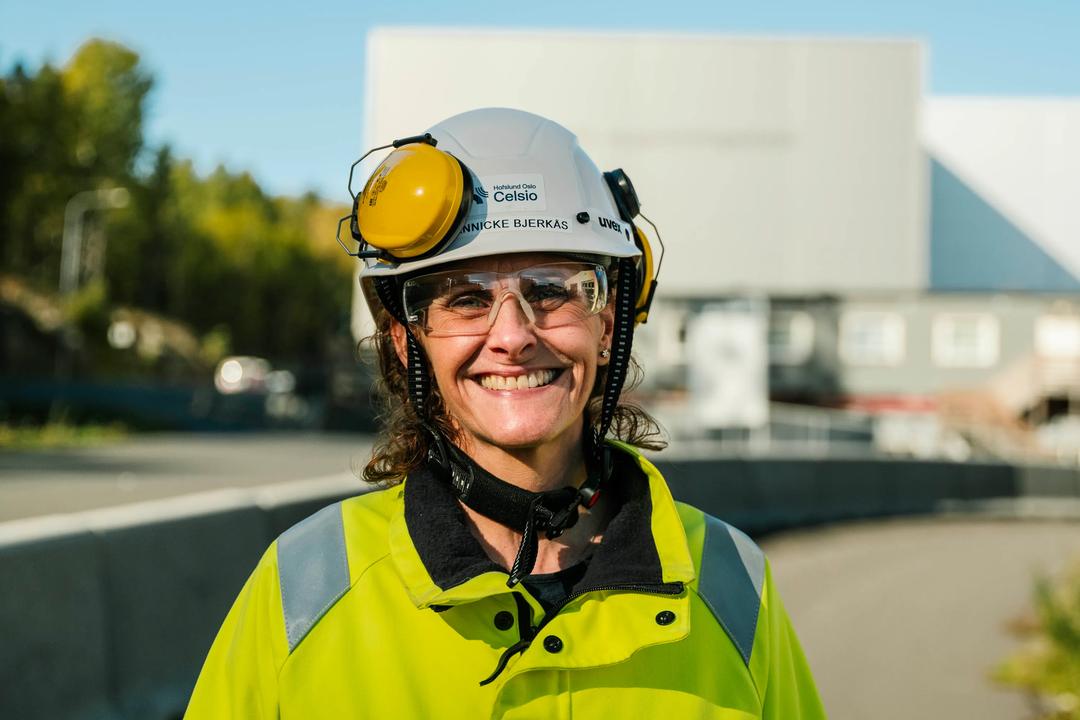
With a background in the Norwegian Armed Forces, leadership experience from the business world and a recently completed MBA from BI, Jannicke Bjerkås is now drawing on her entire toolkit to build a market that barely existed just a few years ago. Photo: Tobias Willumstad.
“No one has gone down this path before us. There are no definitive answers – we have to solve problems as they arise, and they certainly do!”
She laughs. Although the project was put on hold, things were far from quiet for Bjerkås.
Creating a market that barely existed
To understand the challenge, it is important to understand what makes carbon capture from waste incineration different. A key part of the initiative involves capturing and storing CO₂ from biological waste, thereby removing carbon dioxide from the atmospheric carbon cycle.
“We are trying to establish a new area of business. When we capture and store CO₂, we are effectively removing carbon dioxide from the atmosphere. This is called carbon removal, and it has value in an emerging market, although that market is still small and unstable,” Bjerkås explains.
In other words, the project needed more than technology and public funding. It also needed customers willing to pay for carbon removal.
That required a different approach to business.
“The underlying condition throughout has been that there must be a business case. We cannot keep pouring money into a project that will never generate a return. We are still dependent on a certain level of public funding and cannot close that gap yet. That is why these pilot projects are so important. They are more expensive than the projects that will follow,” she says.
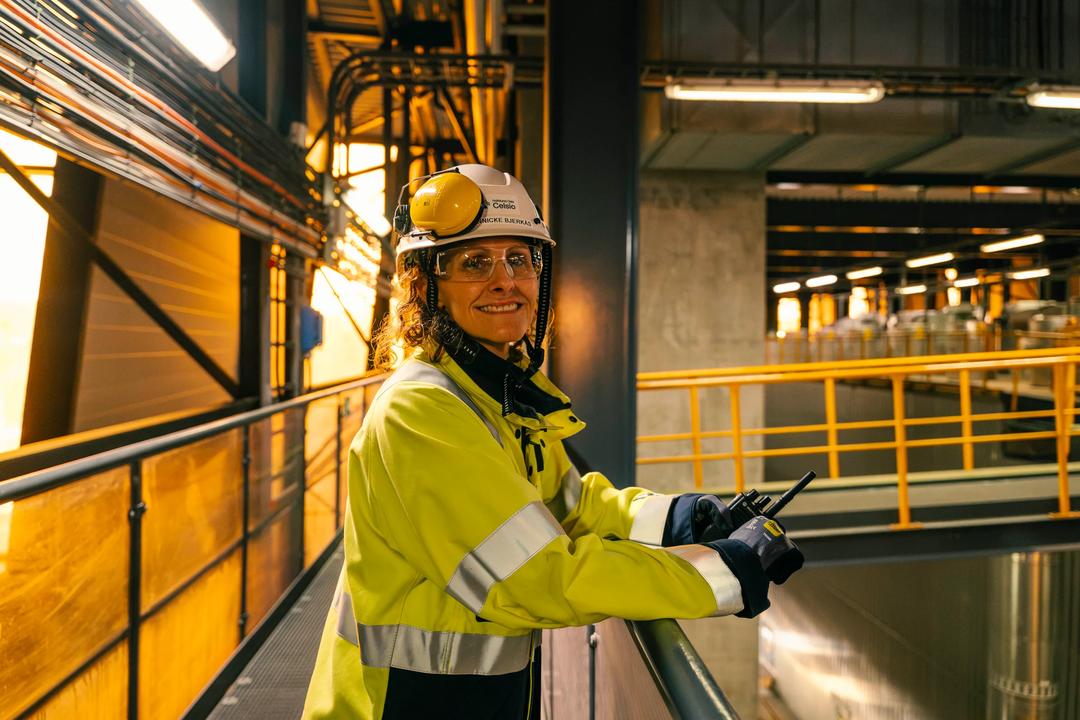
The investments are enormous, but the ambitions extend beyond Oslo. The experience gained at Klemetsrud could prove valuable for other cities seeking to reduce emissions from waste incineration. Video: Tobias Willumstad.
A leadership challenge with no rulebook
Bjerkås already had extensive leadership experience within the organisation when she took over the carbon capture project in 2018.
She is not an engineer, but has technical expertise from her time in the Norwegian Armed Forces. She believes it was a deliberate decision to give responsibility to a leader with broad experience and a thorough understanding of the organisation.
When the project faced its biggest setback, Bjerkås had already started an Executive MBA at BI. She began the programme in 2022, the year before the carbon capture project was put on hold.
It would prove to be a demanding but relevant combination.
As uncertainty surrounding the project increased, she was simultaneously exploring issues relating to innovation, strategy, change and leadership through her studies.
Gaining new perspectives when the project came to a halt
For Bjerkås, the leadership programme at BI proved particularly valuable when dealing with challenges that had neither simple solutions nor ready-made answers.
The programme included innovation and entrepreneurship, with a study visit to the renowned Haas School of Business at the University of California, Berkeley. She also chose to specialise in green innovation.
This gave her new perspectives on how to develop something new and how to lead people through uncertainty and adversity.
“I gained an academic perspective on how setbacks are part of the process when working with innovation. It is about seeing new opportunities rather than dwelling on problems, and continuing to move forward. That is something we have become good at as a team,” she says.
Bjerkås describes herself as an intrapreneur – an entrepreneur working within the framework of a larger corporation.
“I have learnt the value of continuity within a team. We work together and become stronger through shared challenges. We have become more resilient, more creative and more effective in our processes, allowing us to keep moving forward.”
Through working with participants from several continents on BI’s Executive MBA programme, she was also exposed to different experiences, perspectives and approaches to problem-solving than those she normally encounters in her working life.
“It is easy to think that you work best with people who are most like yourself, but you learn the most from those who see things differently. You complement each other and gain a more complete picture of the challenges you need to solve.”
For a leader helping to develop an entirely new market, these were experiences she could apply directly to her work on the carbon capture project.

Executive Master of Business Administration
BI’s Executive MBA gives you the tools you need to lead your organisation into a digital, global and sustainable future – capabilities that will be essential for the leaders of tomorrow.
From project suspension to landmark agreements
While the carbon capture project was on hold, work continued to establish a commercial foundation for the initiative.
Bjerkås led negotiations with the Frontier coalition. Hafslund Celsio also entered into a major agreement with Microsoft and renegotiated its agreement with the Norwegian government. All of this took place over just a few years, through extensive efforts to develop a commercial model for carbon removal.
In January 2025, the final investment decision for the project was made.
The financial aspects of innovation were also something Bjerkås had the opportunity to explore during her Executive MBA studies.
“The course partly coincided with our efforts to secure funding for the next phase. Much of what we learnt about financing green innovation projects was directly applicable,” she explains.
But the most important benefit was not simply a greater understanding of the project’s financial aspects. Her studies also gave her a broader perspective on how new business models can be developed and how to drive change even when the circumstances are constantly shifting.
Lessons that could extend far beyond Oslo
Today, activity at Klemetsrud is once again in full swing.
The 70-metre-high capture tower is under construction. Once completed, the facility will be capable of capturing around 350,000 tonnes of CO₂ annually, which will then be transported and permanently stored approximately 2,600 metres beneath the seabed.
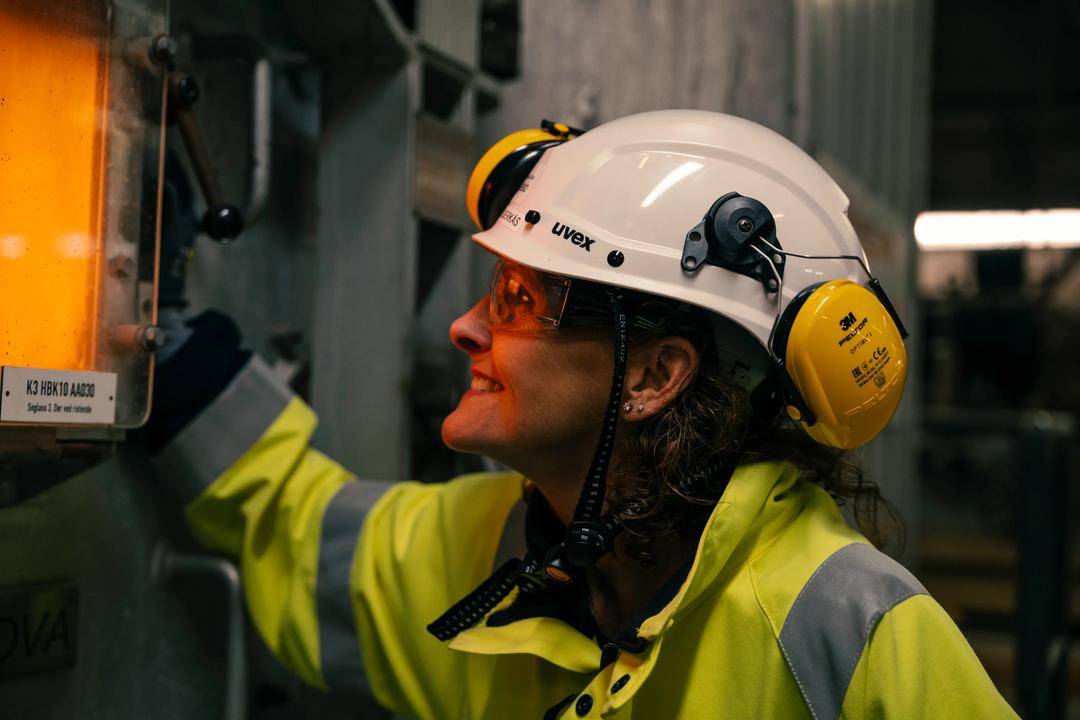
During a tour of the incineration plant, Bjerkås peers through a hatch at the flames inside.
“It is 800 to 900 degrees in there. Nice and warm.”
It is a far cry from traditional leadership work behind a desk. But for Bjerkås, it is precisely the combination of technology, people, strategy and business development that makes the project exciting.
The experience gained at Klemetsrud could also have significance far beyond Oslo. If carbon capture from waste incineration is to become more widespread, the first projects must demonstrate that the solutions work both technically and commercially.
For Bjerkås, the years spent working on the project and studying at BI have led to an important realisation.
“Leading innovation is not about having all the answers, but about creating progress even when the path ahead is uncertain.”
And although she does not describe herself as a particularly optimistic person, working to create something new has also strengthened her belief that major challenges can be overcome.
“I am not particularly optimistic by nature, but humanity has overcome difficult periods before, and I choose to believe that we can do so again.”
DN Content Studio