
Published 22. May 2026
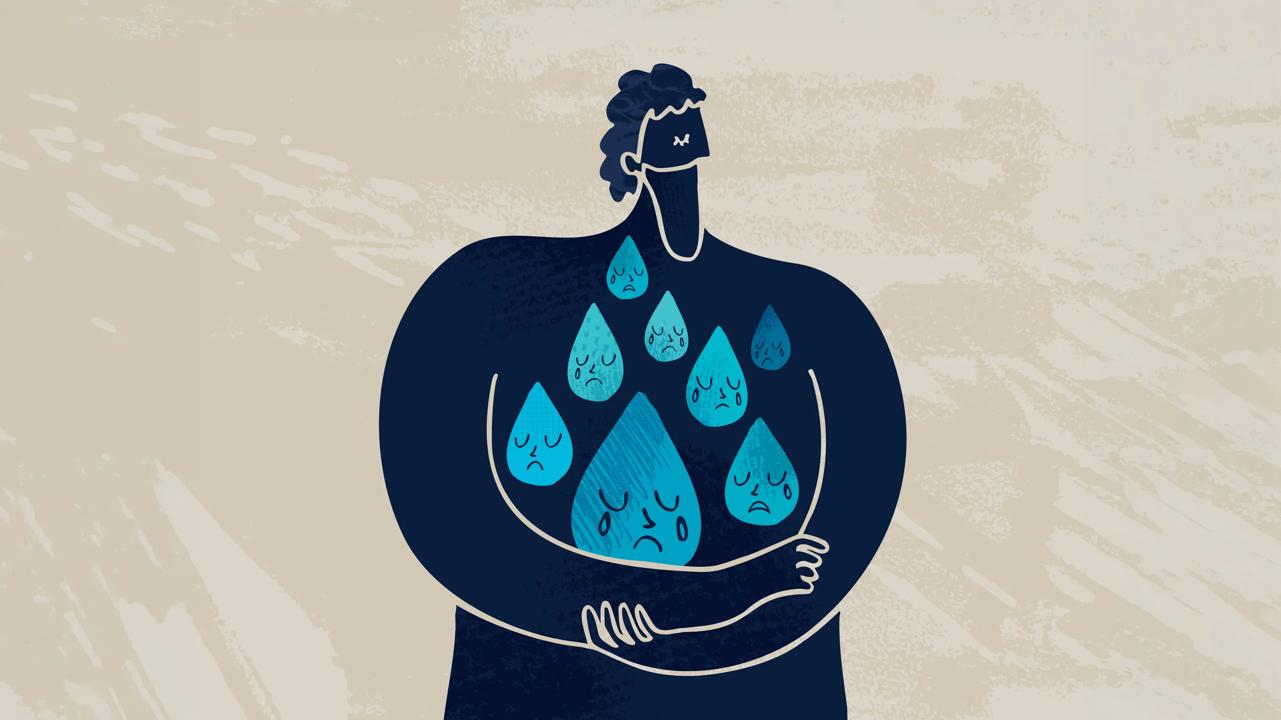
Grief and other private challenges make crying understandable and evoke care and sympathy in others. If, on the other hand, the tears come as a response to professional adversity, doubt often arises as to whether this person is mature enough to stand in their role.
Is this a person on the verge of a mental breakdown? In that case, it’s unfortunate, and sick leave is a natural next step. Continuing in the role seems out of the question for now, since it can only be filled by a resilient person - someone who can bounce back from defeat.
Czech hockey goalkeeper Jakub Dobes broke down in tears after his team, the Montreal Canadiens, lost a game against the New Jersey Devils early last November. In a video interview in the locker room after the game, he was deeply distressed by his own performance, believing he had failed himself and his teammates. Tears ran down his cheeks, and he terminated the interview.
Experts and commentators were critical, and raised doubts about Dobes’ mental strength and suitedness for the role as the Montreal Canadiens goalkeeper afterward. How could a professional athlete in the world's toughest hockey league break down in this manner? Dobes’ tears did not come at a particularly stressful time, as it was early in the season. If he cries after a narrow loss in a regular-season game now, how will he react when things intensify in the playoffs in April and May? Having a stable and reliable goalkeeper is crucial for a team. In this interview, Dobes demonstrated that he was unfit for the role, experts claimed.
Later, this young goalkeeper has had an outstanding season. In many games, he has played brilliantly, securing victories for his team. During the ongoing playoffs, he has been exceptional. The support staff has received praise for how they handled the crisis in November, but no one has known exactly what the club did to get Dobes back on track. Was it mental training, therapy sessions with a psychologist, or other measures that worked wonders?
Allowing people to be themselves
In mid-April, top executive of the club Kent Hughes was asked directly how he had reacted to Dobes’ tears in November. The answer was surprising. Hughes said he hadn't cared at all that Dobes cried on camera after a defeat. Everyone in the club knows that he is a sensitive guy with strong mood swings. "That’s just Jakub," and everyone around him is aware of it. He must be allowed to be himself, Hughes said.
The day after the interview, his teammates joked with him about the tears, creating a wave of liberating laughter in the locker room. The rest of the team knows that this is a person whose mood can be high up and low down, and they can live just fine with that.
What extra effort did the Montreal Canadiens put into helping their crying goalkeeper mentally? None. Like the other players, he receives follow-up from a mental coach, but the tears in November did not lead to panic or any extraordinary measures. This goalkeeper, who both laughs and cries more than others, is deeply valued among his teammates and the rest of the club.
Such a tolerance for tears in one of the world's toughest sports is noteworthy. Here we have an athlete who can be himself at work and does not need to discipline himself or hide his feelings. That is when he performs at his very best. Dobes doesn't need to fight to hold back tears when he is down and in the company of colleagues. Instead, he can go to work relaxed and concentrate on performing and developing as a goalkeeper. It is likely that he is regularly performing at an exceptional level not despite his tears, but because he is in an environment where those tears are seen as normal expressions of his passion and commitment.
There is a lesson to be learned here for environments far beyond hockey and other sports. The fact that highly skilled people cry when they meet adversity does not necessarily give reason to sound the alarm. We don't need to interpret them as immature and hysterical. Everyone has their way of handling defeat, and crying can be as good a way as any other.
For some, crying can be cleansing and sharpening. In such cases, it is more destructive to operate with a ban on tears and zero tolerance for crying. This increases the risk of people hiding away from the community or spending unnecessary energy trying to keep the mask on. Normalizing crying can contribute to more people feeling that they can be themselves in the community, and thus perform their very best at work.
A Norwegian version of this was first published in Dagens Næringsliv: https://www.dn.no/ledelse/ledelse/folelser/oyvind-kvalnes/toleranse-for-tarer/2-1-1977427
See also:
-
 Debate
 -
Management
-
Debate