
Published 15. October 2026
Women remain vastly underrepresented in top political leadership roles globally, occupying only a quarter of parliamentary seats and fewer than one in eight head-of-state positions. One promising approach to reducing gender bias in recent years has been the use of gender-fair language—forms of speech designed to represent men and women equally. To understand whether language can shift political leadership stereotypes, a large international research team investigated how deeply embedded these biases are across diverse cultural settings.
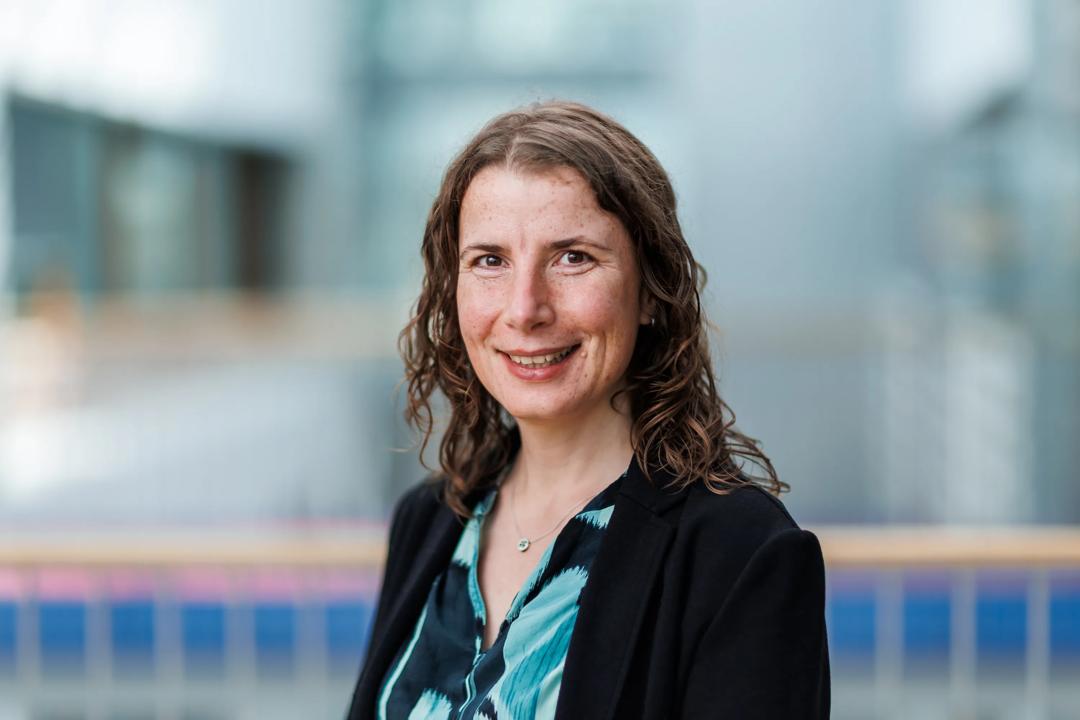
The study was led by an international team under Kim Peters at the University of Exeter Business School, with Suzanne van Gils and Guro Sanden from BI Norwegian Business School participating as one of the Norwegian teams.
In total, the study investigated how 22 996 people across 42 countries and 30 languages characterize political leaders, men, and women across six key social dimensions: friendliness, morality, competence, assertiveness, dominance, and self-sufficiency. The results showed a consistent pattern across virtually every surveyed society: people stereotype political leaders as significantly more similar to men than to women. This masculine advantage was strongest on the dimension of dominance (and to a lesser extent, assertiveness), whereas findings for competence and self-sufficiency were more mixed. Conversely, political leaders are perceived as lacking communal traits—such as warmth, empathy, kindness, and moral sensitivity—that are traditionally associated with women.
Language is not enough
To test whether language can help correct this cognitive bias, the study randomly exposed half of the participants from each country to gender-neutral phrasing ("this person") and the other half to feminised, gender fair language using paired pronouns ("he or she") or paired nouns ("this man or this woman"). Previous studies have found that explicitly incorporating female terms can be more effective in male-biased contexts because it actively prompts people to picture women alongside men in working memory.
Unexpectedly, across our massive multi-country sample, experimental results showed that exposure to paired pronouns had no meaningful impact on reducing male stereotypes or making political leaders seem more similar to women. Subtle linguistic additions like "he or she" were not strong enough to disrupt cognitive assumptions about political leadership roles.
Community stereotypes
To test these perceptions with higher accuracy and overcome participants' desire to sound open-minded, we adapted tools from experimental economics, offering cash rewards of up to 100 GBP to participants who most accurately guessed what other people in their country truly believed. These community predictions painted an even more stereotypical picture of political leaders than participants' individual answers did.
Testing this intervention across 30 languages—including grammatically gendered languages like Arabic and German, natural gender languages like English, or Norwegian, and genderless languages like Farsi, and Indonesian—yielded the exact same result. The study found no strong evidence that using “he or she” (or similar paired forms) made participants see political leaders as less male or more female.
The findings revealed subtle variations worth noting. Using paired nouns ("this man or this woman") showed weak potential to slightly increase similarity ratings to women compared to paired pronouns ("he or she"). Additionally, university student samples demonstrated slightly higher sensitivity to linguistic cues than broader community samples.
Still, the main takeaway from the study is clear: subtle language modifications alone cannot dismantle gender bias in political leadership. Instead of “talking the talk”, decision-makers must invest in concrete interventions, such as transparent candidate selection processes, targeted executive sponsorship, and active policy interventions in order to break down systemic barriers to leadership worldwide.
About the study
- Research network: 377 authors worked on this project executed through the Psychological Science Accelerator (PSA).
- Sample size: 22,996 adults participated in the survey across 42 countries/regions on 6 continents
- Norwegian sample size: From Norway, 617 people participated in the survey: 149 men, 463 women, and 5 unspecified
- Linguistic diversity: The survey was distributed in 30 distinct languages, which were categorized into neutral, natural gender, and gendered language systems.
Source
Peters, K., Jeftić, A., Ballard, T., Zhou, S., Steffens, N. K., Inceoglu, I., Ryan, M. K., Bongiorno, R., Eagly, A., Arriaga, P., Espinosa, A., Aczel, B., Adetula, A., Aglioti, S. M., Akca, E., Akman Direkçi, E., Alizadeh, Z., Alonso-Arbiol, I., Amru, M. F., ... Ziółkowski, A. (2026). Think political leader — think he or she? A multi-country test of a gender-fair language intervention to reduce gendered leadership stereotypes. The Leadership Quarterly, 37(6), 101991. https://doi.org/10.1016/j.leaqua.2026.101991
See also:
-
 Debate
 -
 Debate
 -
Society
-
Business