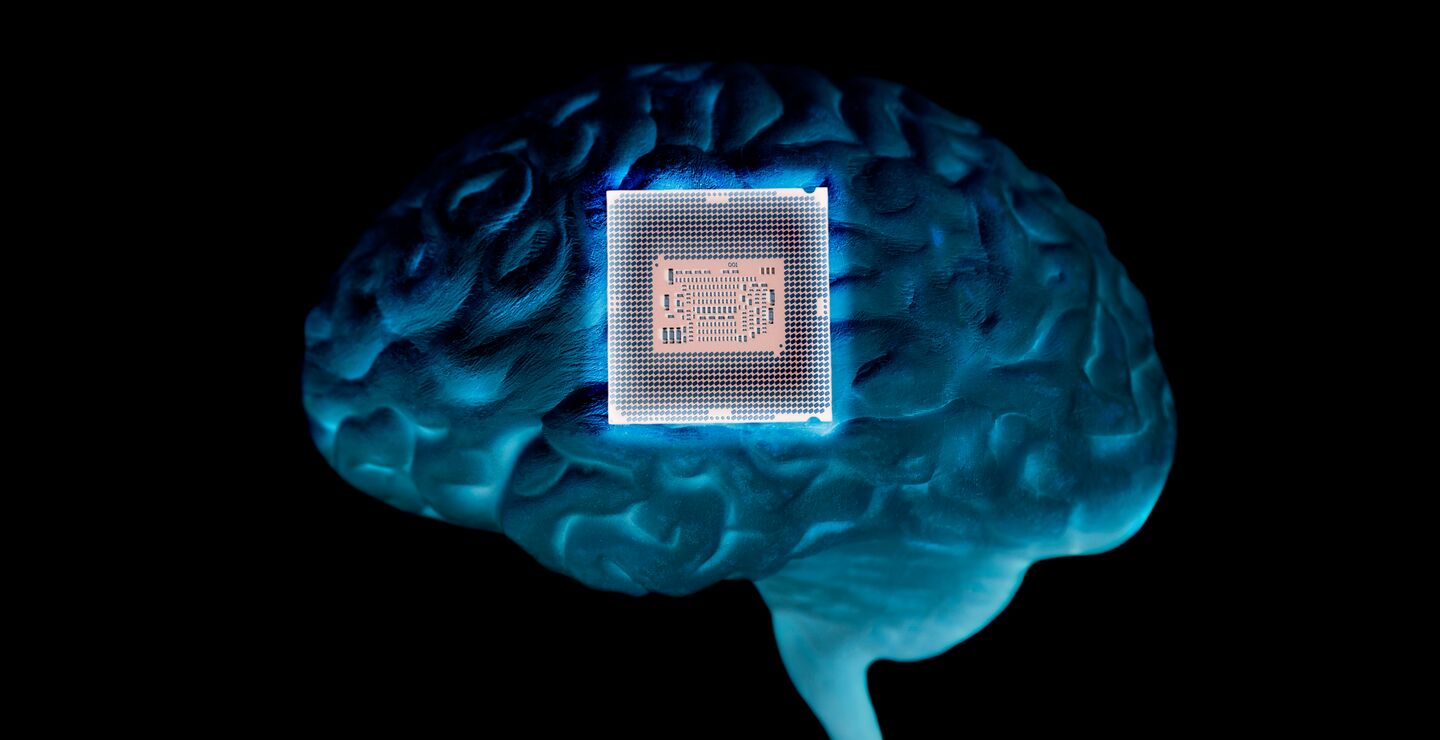

Is the line between human and machine disappearing? New research reveals how "Human-Computer Integration" is transforming products and services from external tools into seamless extensions of our own bodies and minds.
BI BUSINESS REVIEW
By Carlos Velasco (BI Norwegian Business School), Kosuke Motoki (The University of Tokyo), Olivia Petit (KEDGE Business School), Aram Nikolai Andersen (BI Norwegian Business School), Marzieh Alaei (BI Norwegian Business School), and Anders Gustafsson (BI Norwegian Business School).
For decades, technology has remained external. We click, type, swipe, and tap. The device mediates experience but remains separate from it.
However, a profound shift is underway as we move toward Human-Computer Integration (HCInt) where systems seamlessly participate within experience itself. Rather than waiting for commands, they respond to bodily signals, shape perception, or dynamically share control.
Consider the difference between a paper map and a modern driver-assistance system. While the map is a tool you consult, the assistance system "negotiates" control with you, continuously adjusting to your behavior and environment. This creates a partnership where value isn't just delivered at the point of sale, but grows through constant, mutual adaptation.
At the technological frontier, this shift is visible in developments from companies such as Neuralink, Synchron, and Blackrock Neurotech, which are advancing brain–computer interfaces that translate neural activity into digital commands. Neuralink has demonstrated implantable systems enabling users to control cursors via neural signals, while Synchron is developing minimally invasive interfaces designed for assistive communication. Parallel advances in bio-integrated electronics and neural sensing further point toward increasingly intimate forms of coupling between computation and the body.
Two Paths: Fusion vs. Symbiosis
Recent research distinguishes between two broad integration modes:
- Fusion refers to configurations where technology operates as a perceptual or functional extension of the body. Examples include Augmented Reality (AR) headsets that overlay digital data onto your vision or advanced prosthetics that turn thought into physical movement. Here, the interface "disappears" because the response feels immediate.
- Symbiosis describes adaptive partnerships in which agency and control are shared between human and system.Think of AI "copilots" that anticipate your needs or medical devices like insulin pumps that regulate biological processes without you having to think about it. Closed-loop neurostimulation and automated drug-delivery systems similarly illustrate adaptive human–machine co-regulation. In symbiosis, agency and decision-making are shared between the human and the system.
The distinction is not merely technical. Fusion tends to emphasise perceptual incorporation and embodied action, whereas symbiosis tends to emphasise distributed agency and adaptive control. Both alter how consumers experience autonomy, effort, and capability.
Why some technologies feel intuitive
The success of integrated technologies depends on how naturally they align with human perception and bodily expectations.
Embodiment helps explain why certain systems feel seamless. When sensory feedback reliably aligns with intention, technology may be experienced less as an external object and more as part of one’s functional capacity. Misalignment, by contrast, produces friction, distraction, or discomfort.
Peripersonal space, the near-body zone within which objects are perceived as directly actionable, is similarly relevant. Interfaces that position digital elements at intuitive distances feel coherent. Poor spatial calibration feels disorienting. These mechanisms clarify why technically sophisticated innovations may fail if they do not “feel right” in lived experience.
Equally important is the sense of bodily self. For integration to feel comfortable, changes introduced by technology must be interpreted as consistent with one’s own intentions rather than externally imposed.
To succeed in this environment, firms may need to move beyond a narrow focus on features and performance. Because HCInt systems can respond to physiological signals and influence perception, questions of autonomy, privacy, trust, and even mental integrity become increasingly important. These concerns intensify with neurotechnologies that operate directly at the level of neural activity and cognition. Consumers are likely to evaluate not only what these technologies do, but how responsibly they are designed and governed. The challenge for future leaders is to balance these powerful capabilities with genuine transparency and human benefit.
Firms that recognise HCInt as an experiential and strategic transformation, rather than merely a technological one, will be better positioned to navigate its opportunities and risks.
Reference
Velasco, C., Motoki, K., Petit, O., Andersen, A. N., Alaei, M., & Gustafsson, A. (2026). The Rise of Human–Computer Integration in Marketing: A Theory Synthesis. Psychology & Marketing.
Published 19. February 2026
See also:
-

BI Business Review
Photorealistic AI images in advertising
The real question isn’t “Can we use it?” It’s “When does it make sense for our brand?”
-
BI Business Review
AI is driven by super users, not strategy
Individual enthusiasts still drive AI adoption, according to communication leaders from Europe’s 300 top companies – with little overall strategic direction.
-

BI Business Review
The Leadership Habit That Fuels Innovation
Curiosity expands your world—and every expansion creates new ideas.
-

BI Business Review
Stronger by Choice: Thriving Without Competition
Why do some monopolies stand out as truly remarkable workplaces? And what can every leader learn from them?
You can also
see all news here.