
Published 25. November 2026
Growth has traditionally been associated with selling more: more products, more transactions and more frequent purchases. This logic is deeply embedded in the way companies plan, measure performance and talk about success. While many companies seek to reduce their environmental impact by improving production processes, few question the underlying business model and its dependence on increasing sales volumes. Yet growing resource scarcity raises a more fundamental question: can businesses create greater economic value without continuously producing and selling more?
Northern Playground, an Oslo-based outdoor clothing company, has decided to challenge this logic. The company was growing and its products were gaining traction in the market. But selling more clothes also meant producing more, using more resources and contributing to the same consumption patterns its founders wanted to change.
The problem became particularly visible in the relationship with traditional distributors. As demand grew, distributors wanted more colors, more product variations and a continuous flow of new items to keep customers buying. This was commercially attractive, but increasingly difficult to reconcile with the company’s values.
Northern Playground made a bold decision. It ended its relationships with traditional distributors and stepped away from a model that could have supported further growth. For a company operating in fashion, an industry with a significant environmental footprint, this meant questioning some of the mechanisms through which the industry generates sales.
Building a business around its values
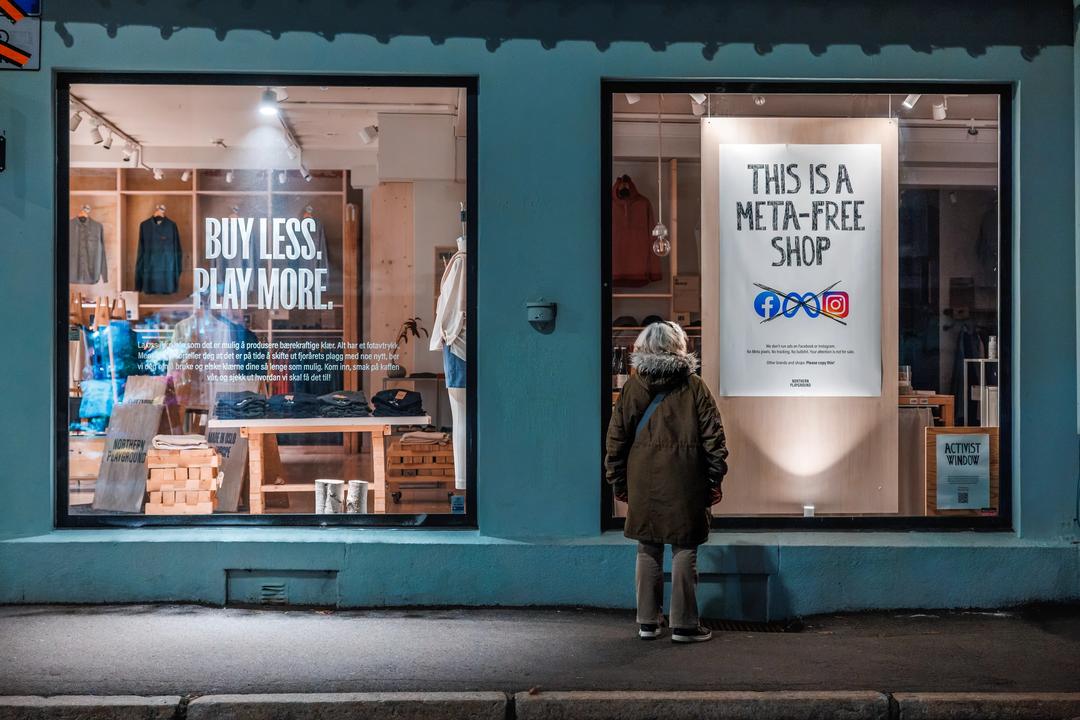
More recently, Northern Playground made another significant choice: it stopped spending money on advertising through Meta.
The decision reflected its discomfort with a digital advertising system built around capturing attention and continuously exposing people to new reasons to consume. Northern Playground no longer wanted to spend a significant share of its revenues supporting a system that conflicted with the behaviors it wanted to encourage.
Sales fell when the advertising stopped. Yet the reduction in sales was no greater than the amount the company had previously spent on advertising. The company was therefore able to continue operating without this considerable marketing expense.
Northern Playground is also developing visibility through its community. It has around 1,100 co-owners and a wider network of customers, ambassadors, activists and supporters. Its 2035 manifesto captures the ambition in a simple phrase: “We grow through a community of real people, not algorithms.”
Listen to podcast: These ideas also emerged in a conversation with Northern Playground's founder on the author's podcast Creativity Matters! Listen to the conversation here.
Leaving distributors and abandoning paid social media advertising are commercially risky choices. In both cases, Northern Playground gave up established mechanisms for increasing reach and sales because they conflicted with the kind of company it wanted to build.
But a business still needs to generate revenues and profits. For Northern Playground, the challenge is to build a commercially attractive business while making market choices that remain consistent with its values.
Rethinking how value is created
Part of the answer lies in changing the economics of the product. Northern Playground designs clothes around durability, repair and continued use. A product that delivers value for longer can justify a higher price, allowing the company to generate sufficient revenues from a lower volume of sales.
Value can also come from repair, redesign, customization and the relationship around the brand. The company’s longer-term vision includes stores where repair and redesign coexist with new products and where customers participate in activities and experiences organized through its community.
Making this work creates real commercial tensions. Repair requires skilled labor and logistics. Charging customers the full cost can make replacement more attractive, while absorbing too much of the cost puts pressure on margins.
The Play More Jersey offers another example. It was created as an alternative to the repeated launch of new football shirts that encourages supporters to replace products they already own. The shirt sold out immediately. Its environmental success, however, depends on whether customers use it instead of buying several other shirts over time or simply add it to their wardrobes.
Pricing creates similar difficulties. Northern Playground has resisted discount-driven selling because promotions can stimulate unplanned purchases. Unsold stock still ties up capital and creates financial pressure.
These dilemmas are part of the experiment. Decisions about price, repair, products, marketing and growth have to satisfy the company’s purpose while keeping the business economically attractive.
Lessons beyond the clothing industry
The questions raised by Northern Playground are relevant far beyond fashion. Rethinking value creation requires managers to examine what customers are paying for, how long that value lasts, and where new opportunities for growth may come from. Similar shifts are already visible across industries:
- Manufacturing: companies are increasingly combining equipment sales with maintenance, upgrades and performance-based services, generating revenues over a longer product lifecycle.
- Software: subscription models have made long-term customer relationships and recurring revenues central to value creation.
- Mobility: sharing and service-based models generate revenues from the use of vehicles, increasing the value created from existing assets.
- Hospitality: adaptive reuse is allowing companies to create new value from existing buildings, reducing the need for new construction.
Northern Playground also shows how demanding such choices can be. Giving up established sources of sales or visibility creates commercial pressure, and alternative sources of value need to be economically strong enough to support the business. The company is still working through many of these questions.
For managers, this makes the case useful. It encourages them to examine the value generated by each product, customer relationship or asset and to experiment with business models that combine commercial performance with the values they want their company to represent.
Experimenting with new ways of doing business
Growing awareness of the need to reduce our environmental footprint is also changing how companies think about business. The challenge is no longer simply to make production more sustainable, but to reconsider business models that depend on ever-increasing consumption. Northern Playground illustrates how questioning this dependence can open up alternative ways of creating economic value. While the solutions will differ across industries, the underlying challenge remains the same: creating economic value without continuously increasing resource consumption.
References:
For further insights into Northern Playground's approach, listen to Federica De Molli's conversation with the company's founder on Creativity Matters!, a podcast exploring creativity, innovation and alternative ways of doing business. Link: https://open.spotify.com/episode/2wddevXv7CasCZPjJJq09M?si=8539da1135184a90
This article is connected to an emerging research project by Federica De Molli and Jan Walter Parr at BI Norwegian Business School, exploring how organizations and their wider ecosystems experiment with alternative models of growth, governance, stakeholder participation and value creation. The project investigates how businesses can develop economically viable and environmentally sustainable ways of organizing, moving beyond conventional assumptions about continuous growth.
See also:
-
Management
-
Opinion
-
Management