Jon H Fiva
Professor
Institutt for samfunnsøkonomi
Professor
Institutt for samfunnsøkonomi
Artikkel Jon H. Fiva, Oda Nedregård, Henning Øien (2025)
In list-based proportional representation systems, the election of individual politicians depends on their rank position on the ballot. Party organizations thereforeplay a crucial role in determining which candidates will be elected, and incumbents have incentives to remain popular among party elites. What role do politicians' group identities play in such a setting? We study this question using legislative speech from the Norwegian Parliament and recently developed techniques for measuring group dierences in high-dimensional choices. Across the background characteristics we consider - gender, age, urbanicity, and class background - we document substantial differences in speech, even when comparing legislators from the same political party and policy committee. This suggests that even in party-centered environments, politicians' social ties and group identities matter for the policymaking process.
Artikkel DANIEL M. SMITH, ALEXANDRA CIRONE, DAWN L. TEELE, GARY W. COX, Jon H. Fiva (2025)
The share of women in politics is higher, on average, under closed-list proportional representation (PR) electoral systems compared to majoritarian systems. Yet, even in PR systems, progress toward gender parity has been slow and uneven. We argue that women’s representation and career progression under PR might be impeded when single-occupant positions, such as local mayor and list leader, serve as important stepping stones in political career paths. Using a century of detailed candidate-level data from Norway, we investigate (1) whether gaps in women’s representation emerge at these “majoritarian stepping stones” and (2) how access to these positions affects women’s progression into higher offices. Our empirical analysis reveals that gender gaps indeed emerge at majoritarian stepping stones. However, we also document how Norwegian parties have employed workarounds—promoting women occupants of these positions at higher rates than men—to mitigate the adverse effects of this hidden majoritarianism on women’s representation in higher offices.
Artikkel Jon Hernes Fiva, Oda Nedregård, Henning Øien (2025)
Recent advancements in computing power and machine learning techniques have facilitated the digitization of new corpora, as well as new methods for studying high-dimensional data. This has enabled empirical investigations of fundamental questions in the social sciences that were previously restricted by technical limitations or data availability. In this note, we introduce a new dataset covering debates in the Norwegian Parliament in the 1945-2024 period. This dataset, which covers close to one million speeches, includes information about speeches (full text, date of speech, and chamber), speakers’ status (parliamentary president, member of parliament, deputy member of parliament, or cabinet minister), as well as speaker background characteristics (party affiliation, committee membership, district affiliation, rank on electoral lists, gender, and birth year). This dataset will enable extensive research into political representation in a party-centered electoral framework. More broadly, this dataset serves as a vital resource for interdisciplinary research, enabling studies on the evolution of language, rhetoric, and the broader socio-economic factors influencing legislative behavior.
Artikkel Jon H. Fiva, Oda Nedregård (2024)
How important are political parties in motivating and disciplining elected officials? Using a difference-in-differences design, we study how shocks to incumbents’ reelection probabilities affect legislative behavior in a setting where parties fully control candidate selection. We find that within-term variation in lame-duck status has a strong negative effect on legislative effort. There is, however, no clear evidence that lame-duck status affects the extent to which legislators deviate from the party line. Our findings align well with the citizen–candidate framework, where candidates have fixed ideological positions that do not vary based on electoral incentives.
Artikkel Jon H. Fiva, Federica Izzo, Janne Tukiainen (2024)
Political parties play a crucial gatekeeping role in elections, including controlling electoral resources, candidate recruitment, and electoral list compositions. In making these strategic choices, parties aim to encourage candidates to invest in the campaign, while also trying to secure advantages for their preferred candidates. We study how parties navigate this trade-off using a specific feature of the Norwegian local electoral system in which parties can give advantaged positions to some candidates in an otherwise open list. Our theory reveals that parties’ ex-ante electoral strength impacts their strategic decisions. Notably, the trade-off is weaker for more popular parties, allowing them to facilitate the election of their preferred candidates without compromising the party’s overall performance. We show empirically that the moral hazard concern is real, and that larger parties are indeed more likely to use their power to make some candidates safe. The advantage of large parties extends further: safeguarding specific candidates enables parties to achieve disproportionately favorable outcomes in post-electoral bargaining. These findings reveal new insights for political representations, policy outcomes, and intra-party dynamics more broadly.
Artikkel Gary W. Cox, Jon H. Fiva, Max-Emil Mohn King (2024)
A vast and growing quantitative literature considers how social networks shape political mobilization but the degree to which turnout decisions are strategic remains ambiguous. Unlike previous studies, we establish personal links between voters and candidates and exploit discontinuous incentives to mobilize across district boundaries to estimate causal effects. Considering three types of networks – families, co-workers, and immigrant communities – we show that a group member's candidacy acts as a mobilizational impulse propagating through the group's network. In family networks, some of this impulse is non-strategic, surviving past district boundaries. However, the bulk of family mobilization is bound by the candidate's district boundary, as is the entirety of the mobilizational effects in the other networks.
Artikkel Jon H. Fiva, Max-Emil Mohn King (2023)
Women tend to experience a substantial decline in their labour income after their first child is born, while men do not. Do such ‘child penalties’ also exist in the political arena? Using comprehensive administrative data from Norway, we find that women are less likely than men to secure elected office after their first child is born. The effects manifest already from the nomination stage, where mothers receive less favourable rankings on party lists relative to comparable fathers. This paper broadens our understanding of a fundamental social issue in political representation and demonstrates how motherhood affects even positively selected women.
Artikkel Gary W. Cox, Jon H. Fiva, Daniel M. Smith, Rune Jørgen Sørensen (2021)
How do parties motivate candidates to exert effort in closed-list elections, where seat outcomes are uncertain only for candidates in marginal list positions? We argue that parties can solve this moral hazard problem by committing ex ante to allocate higher offices in government, such as cabinet portfolios, monotonically with list rank. Under this schedule of compensation, parties have incentives to rank candidates in order of quality (under some conditions) and candidates have incentives to increase the volume and geo-diversity of their campaign efforts as their rank improves. Using detailed data on Norwegian candidates and their use of mass and social media in recent elections, we confirm that (1) candidate quality increases with list rank, and (2) candidates in safer ranks shift from intra-district to extra-district and national media exposure—a composition of effort that can increase their party’s chance of entering government, and thus their own potential share of the spoils.
Artikkel Jon H. Fiva, Askill Harkjerr Halse, Daniel Markham Smith (2021)
We investigate whether geographic representation affects local voting behavior in closed-list proportional representation (PR) systems, where conventional theoretical wisdom suggests a limited role of localism in voter preferences. Using detailed data on Norwegian parliamentary candidates' hometowns, we show that parties engage in geographic balancing when constructing candidate lists. However, because most districts contain more municipalities than seats, not all municipalities will ultimately see a local candidate elected. A regression discontinuity design applied to marginal candidates reveals that parties obtain higher within-district support in subsequent elections in incumbents' hometowns — novel evidence of "friends-and-neighbors" voting in an otherwise party-centered environment. Exploring the mechanisms, we find that represented municipalities often continue to have locally-connected candidates in top positions, in contrast to municipalities with losing candidates, and are more frequently referenced in legislative speeches. There is no evidence that unequal representation creates inequalities in distributive policies.
Artikkel Jon H. Fiva, Benny Geys, Tom-Reiel Heggedal, Rune Jørgen Sørensen (2021)
Building on agency-theoretical perspectives of public bureaucracies, we argue that politician–bureaucrat preference alignment can have important implications for bureaucrats’ pay. We study such private gains to bureaucrats from their political alignment with elected politicians using detailed data on all 1,632 top administrators active in all Norwegian municipalities over a period of 25 years (1991–2015). Whereas existing studies generally rely on proxies for politician–bureaucrat political alignment, a rare feature of our data allows measuring it directly since 27% of top bureaucrats ran for political office. We focus explicitly on individuals at the very top of the administrative hierarchy and are able to separate the intensive margin (i.e., wage increases) from any additional effects at the extensive margin (i.e., new appointments). Using close elections for inference in a regression discontinuity analysis, we find that politician–bureaucrat alignment significantly increases top bureaucrats’ wage even in the Norwegian civil service system. This has important implications also from a theoretical perspective. Our results indeed go against predictions from models with policymotivated bureaucrats, but are consistent with politically aligned principal–agent matches being more productive.
Artikkel Alexandra Cirone, Gary W. Cox, Jon H. Fiva (2020)
This paper investigates party use of seniority systems to allocate nominations for elected and appointed offices. Such systems, which can regulate party members’ access to offices at multiple levels of their careers, are defined by two main rules or norms: an incumbent re-nomination norm and a seniority progression norm. Using comprehensive electoral and candidate data from Norwegian local and national elections from 1945 to 2019, we find systematic patterns consistent with these two norms. Our work illuminates an institutional aspect of candidate selection that the current literature has ignored while noting some of the important consequences of seniority-based nominations for party cohesion and stability.
Artikkel Gary W. Cox, Jon Hernes Fiva, Daniel M. Smith (2020)
The concept of electoral competition plays a central role in many subfields of political science, but no consensus exists on how to measure it. One key challenge is how to conceptualize and measure electoral competitiveness at the district level across alternative electoral systems. Recent efforts to meet this challenge have introduced general measures of competitiveness which rest on explicit calculations about how votes translate into seats, but also implicit assumptions about how effort maps into votes (and how costly effort is). We investigate how assumptions about the effort-to-votes mapping affect the units in which competitiveness is best measured, arguing in favor of vote-share-denominated measures and against vote-share-per-seat measures. Whether elections under multimember proportional representation systems are judged more or less competitive than single-member plurality or runoff elections depends directly on the units in which competitiveness is assessed (and hence on assumptions about how effort maps into votes).
Artikkel Jon Hernes Fiva, Simon Hix (2020)
Electoral reform creates new strategic coordination incentives for voters and elites, but endogeneity problems make such effects hard to identify. This article addresses this issue by investigating an extraordinary dataset, from the introduction of proportional representation (PR) in Norway in 1919, which permits the measurement of parties’ vote shares in pre-reform single-member districts and in the same geographic units in the post-reform multi-member districts. The electoral reform had an immediate effect on the fragmentation of the party system, due in part to strategic party entry. The authors find, though, that another main effect of the reform was that many voters switched between existing parties, particularly between the Liberals and Conservatives, as the incentives for these voters to coordinate against Labor were removed by the introduction of PR.
Artikkel Gary W. Cox, Jon H. Fiva, Daniel Markham Smith (2019)
A prominent line of theories holds that proportional representation (PR) was introduced in many European democracies by a fragmented bloc of conservative parties seeking to preserve their legislative seat shares after franchise extension and industrialization increased the vote base of socialist parties. In contrast to this “seat-maximization” account, we focus on how PR affected party leaders’ control over nominations, thereby enabling them to discipline their followers and build more cohesive parties. We explore this “party-building” account in the case of Norway, using roll call data from six reform proposals in 1919. We show that leaders were more likely to vote in favor of PR than rank-and-file members, even controlling for the parties’ expected seat payoffs and the district-level socialist electoral threat facing individual legislators. Moreover, using within-legislator variation, we show that the internal cohesion of parties increased significantly after the introduction of PR
Artikkel Jon H. Fiva, Daniel M. Smith (2018)
A handful of recent studies have investigated the causal effect of incumbency on dynasty formation in candidate-centered electoral contexts. We use candidate-level data and a regression discontinuity design to estimate the incumbency advantage and its relation to dynasty formation in the party-centered, closed-list, proportional-representation setting of Norway. The results indicate that the incumbency advantage exists even in this party-centered environment; however, in contrast to recent findings for the United States and the Philippines, we find no evidence that incumbency is important to the formation of dynasties. This finding underscores the need for more research into the role of internal party organizational networks in the perpetuation of political dynasties.
Artikkel Jon H. Fiva, Olle Folke, Rune Jørgen Sørensen (2018)
We show that small shifts in representation can affect policy in proportional election systems. Using data from Norway, we find that a larger left-wing party leads to more property taxation, higher childcare spending, and lower elderly care spending, while local public goods appear to be a non-partisan issue. These effects are partly due to shifts in bloc majorities, and partly due to changes in the left–right position of the council, keeping the majority constant. The estimates on spending allocations are rather imprecise, but they are consistent with evidence on politicians' fiscal preferences and patterns in media attention.
Artikkel Jon H. Fiva, Helene Lie Røhr (2018)
Incumbents tend to have a solid electoral advantage in candidate-centered electoral settings. Do similar incumbency effects exist in more party-centered environments? We estimate incumbency effects in an open-list proportional representation system, exploiting that seats are first allocated across parties, and then to candidates within party lists. Using data from Norwegian local elections 2003–2015, we document that a candidate that barely wins a seat in the local council has about a 9 percentage points (43%) higher probability of being elected in the next election compared to a candidate that just misses out on a seat on the same party list. We find no evidence that voters contribute to this personal incumbency advantage. Rather, it seems as if party elites are instrumental in securing the electoral success of their party affiliates. We show that incumbents and non-incumbents run again in the subsequent election at about equal rates, but that incumbents tend to advance in the party hierarchy and obtain safer ballot positions in future elections, which is what ultimately leads to electoral success.
Artikkel Jon H. Fiva, Daniel M. Smith (2017)
Since gaining full independence in 1905, Norway has experienced more than a century of democratic elections, and has reformed its electoral system three times, most notably with the switch from a two-round runoff system to proportional representation in 1919. This research note introduces a new dataset featuring all candidates running for parliamentary (Storting) elections from 1906 to 2013, and documents the patterns over time and across electoral systems in the development of the party system; candidates’ gender, age, occupation, and geographic ties; and voter turnout. Scholars interested in using the dataset can gain access to it through the Norwegian Centre for Research Data
Artikkel Jon H. Fiva, Daniel M. Smith (2017)
What effect do candidates with local ties have on voter turnout and party support? A considerable challenge within the existing literature on the personal vote, including that part which derives from local ties, is disentangling it from the party vote using observational data. We exploit the unique institutional context of Norway’s historical two-round system, and data measured at the municipality level, to evaluate the mobilizational impact of voter attachment to parties versus (local) candidates. Under this system, entry into the second round was unrestricted, with the number and identity of candidates determined by elite coordination decisions. In municipalities where coordination at the district level between rounds resulted in the withdrawal of a candidate with local ties, we document a strong negative effect on both turnout and party support, which highlights the value of the personal vote for mobilization, and the potential trade-offs that confront parties and coalitions in nomination decisions.
Kapittel Lars-Erik Borge, Jon H. Fiva, Jørn Rattsø, Rune Jørgen Sørensen (2017)
I denne artikkelen analyserer vi lokale folkeavstemninger om kommunesammenslåing. Det forventes at stor forskjell i folketall, inntektsnivå og politiske preferanser mellom kommuner vil gjøre sammenslåing vanskelig. Det foreligger data for 253 folkeavstemninger i den reformprosess som nå foregår. Mange kommuner har holdt flere avstemninger og har stilt spørsmål om flere alternativer. Analysen her baserer seg på forskjeller blant kommuner innen en aktuell sammenslåings-konstellasjonen og ser bare på symmetriske folkeavstemninger. Hovedresultatet er en positiv sammenheng mellom folketall og andel ja-stemmer til sammenslåing. Bekymringen for å bli overkjørt ser ut til å være større enn håpet om stordriftsgevinster for små kommuner. Analysen indikerer at politisk avstand betyr noe i tillegg – man ønsker ikke å bli styrt av et annet politisk flertall. Vi studerer også beslutningen om å holde avstemning og valgdeltagelsen. Små kommuner har høyere tilbøyelighet til å holde folkeavstemning. Små og rike kommuner innen konstellasjonen har høyere valgdeltagelse – de har mer å forsvare.
Artikkel Jon H. Fiva, Askill Harkjerr Halse (2016)
Pork barrel spending is typically attributed to the strategic behavior of political elites hoping to be electorally rewarded by voters residing in their districts. Such behavior is expected to depend on the incentives imposed by the electoral system. We estimate the causal effect of local representation in a closed-list proportional representation system where individual candidates have no clear electoral incentive to favor their hometown. Using data from Norwegian regional governments, we still find a hometown bias. We document that municipalities with a representative on the regional council from the same party as the regional governor tend to obtain more funding for local investments. Citizens also tend to vote more often for parties whose gubernatorial candidate is from their own hometown, consistent with expectations of particularistic benefits. A possible explanation is that regional council members are often recruited from local politics and remain loyal to their roots. We find no evidence that regional council experience affects politicians' future career prospects at the local level.
Artikkel Gary W. Cox, Jon H. Fiva, Daniel M. Smith (2016)
A substantial body of research examines whether increasing the proportionality of an electoral system increases turnout, mostly based on cross-national comparisons. In this study, we offer two main contributions to the previous literature. First, we show that moving from a single-member district system to proportional representation in multimember districts should, according to recent theories of elite mobilization, produce a contraction in the distribution of mobilizational effort across districts and, hence, a contraction in the distribution of turnout rates. Second, we exploit a within-country panel data set based on stable subnational geographic units before and after Norway’s historic 1919 electoral reform in order to test various implications stemming from the contraction hypothesis. We find significant support for the predictions of the elite mobilization models.
Artikkel Jon H. Fiva, Olle Folke (2016)
To understand how electoral reform affects political outcomes, one needs to assess its total effect, incorporating how the reform affects the outcomes given the political status quo (the mechanical effects) and the additional reactions of political agents (the psychological effects). We propose a framework that allow us to ascertain the relative magnitude of mechanical and various psychological effects. The empirical approach is based on pairwise comparisons of actual and counterfactual seat allocation outcomes. We use the design to analyze a nationwide municipal electoral reform in Norway, which changed the seat allocation method from D'Hondt to Modified Sainte-Laguë. We document clear psychological effects.
Artikkel Sara Cools, Jon H. Fiva, Lars Johannessen Kirkebøen (2015)
Reserving a share of the parental leave period for fathers is considered necessary for inducing fathers to take leave, and for men's increased participation in child-rearing. We investigate how a parental leave reform directed towards fathers impacted leave taking, and in turn children's and parents' long term outcomes. A paternal leave quota greatly increases the share of men taking paternity leave. We find evidence that children's school performance improves as a result, particularly in families where the father has higher education than the mother. We find no evidence that paternity leave counters the traditional allocation of parents' labor supply.
Artikkel Jørgen Juel Andersen, Jon H. Fiva, Gisle J. Natvik (2014)
Most theories of voter behavior predict that electoral participation will be higher in elections where more is at stake. We test this prediction by studying how participation is affected by exogenous variation in local governments' financial flexibility to provide pork for their voters.Utilizing simultaneous elections for different offices, we identify a positive effect of election stakes on participation: Higher stakes at the local level increase participation at the local relative to the regional election. Survey evidence indicates that the underlying mechanism relates to citizens' acquisition of information.
Artikkel Jon H. Fiva, Torbjørn Hægeland, Marte Rønning, Astri Syse (2014)
The public health care systems in the Nordic countries provide high quality care almost free of charge to all citizens. However, social inequalities in health persist. Previous research has, for example, documented substantial educational inequalities in cancer survival. We investigate to what extent this may be driven by differential access to and utilization of high quality treatment options. Quasi-experimental evidence based on the establishment of regional cancer wards indicates that i) highly educated individuals utilized centralized specialized treatment to a greater extent than less educated patients and ii) the use of such treatment improved these patients' survival.
Artikkel Jon H. Fiva, Gisle J. Natvik (2013)
An insight from dynamic political economy is that elected officials may use state variables to affect the choices of their successors. We exploit the staggered timing of local and national elections in Norway to investigate how politicians' re-election probabilities affect their investments in physical capital. Because popularity is endogenous to politics, we use an instrumental variable approach based on regional movements in ideological sentiment. We find that higher re-election probabilities stimulate investments, particularly in purposes preferred more strongly by the incumbent parties. This aligns with theory where capital and current expenditures are considered complementary inputs to government production.
Artikkel Jon H. Fiva, Lars Johannessen Kirkebøen (2011)
Artikkel Jon H. Fiva, Torbjørn Hægeland, Marte Rønning (2010)
Artikkel Jon H. Fiva (2009)
Artikkel Jon Hernes Fiva, Marte Rønning (2008)
Recent theoretical contributions indicate favorable incentive effects of property taxation on public service providers. The object of this paper is to confront these theories with data from Norwegian school districts. The institutional setting in Norway is well suited for analyzing the effects of property taxation because one can compare school districts with and without property taxation. To take into account potential endogeneity of the choice of implementing property taxation, we rely on instrumental variable techniques. The empirical results indicate that, conditional on resource use, property taxation improves school quality measured as students' result on the national examination.
Artikkel Jon Hernes Fiva, Jørn Rattsø (2007)
Fiscal competition may influence the design of tax systems. The tax competition literature has concentrated on mobility of tax base and tax levels, while we turn the attention to the political decision-making system and the determination of tax structure. In the Norwegian setting local governments make a discrete choice whether to have property tax. The local choice is investigated in an econometric model allowing for yardstick competition. Our results indicate that yardstick competition explains the distinct geographic pattern in local property taxation observed. Grants have no effect on the propensity to have property taxation, consistent with the flypaper effect. The main methodological challenge handled concerns spatial interaction with discrete choice.
Artikkel Jon H. Fiva (2007)
Artikkel Jon H. Fiva, Jørn Rattsø (2007)
Artikkel Jon Hernes Fiva (2006)
Artikkel Jørn Rattsø, Jon Hernes Fiva (2006)
Artikkel Jon Hernes Fiva, Jørn Rattsø (2005)
Kronikk Jon H. Fiva (2025)
Fredningen av sykelønnsordningen har vart i snart tre tiår. Dyrevelferd og bompenger nevnes i tre ganger så mange taler i Stortinget som sykelønn.
Kronikk Jon H. Fiva, Oda Nedregård, Henning Øien (2025)
Manglende balanse har konsekvenser for hvilke saker og temaer som løftes opp på Stortingets talerstol.
Kronikk Sigurd Storehaug Arntzen, Jon Hernes Fiva, Rune Jørgen Sørensen (2024)
Intervju Jon H. Fiva (2023)
Kronikk Jon Hernes Fiva (2023)
Kronikk Max-Emil Mohn King, Jon H. Fiva (2022)
Kronikk Jon H. Fiva, Askill Harkjerr Halse (2016)
Kronikk Jon H. Fiva, Leif Helland, Rune J. Sørensen (2015)
Kronikk Jon H. Fiva, Gisle James Natvik (2015)
Kronikk Jon H. Fiva (2012)
Intervju Jon H. Fiva (2011)
Intervju Jon Hernes Fiva (2006)
Artikkel Jon H. Fiva (2025)
De siste årene har norske medier avslørt en rekke skandaler som involverer norske politikere. Sakene omfatter alt fra fusk med masteroppgaver og småtyveri til misbruk av pendlerboliger og omfattende økonomisk bedrageri knyttet til reiserefusjoner. Totalt sett danner dette et inntrykk av at de som styrer Norge er en tvilsom gjeng. Men er norske politikere egentlig verre enn befolkningen de er trukket fra?
Konferanseforedrag Jon Hernes Fiva (2023)
Rapport Gary W. Cox, Jon H. Fiva, Max-Emil Mohn King (2023)
Foredrag Jon H. Fiva (2023)
Konferanseforedrag Jon Hernes Fiva (2023)
Rapport Alexandra Cirone, Gary W. Cox, Jon H. Fiva, Daniel M. Smith, Dawn Teele (2023)
Closed-list proportional representation (PR) generates higher average levels of descriptive representation for women. But because parties control candidate promotion, often based on seniority rules, gender bias in the seniority system can potentially curtail women’s career advancement. We theorize how seniority systems might operate in a gender-neutral way at three stages of a typical national-level political career: (1) nomination, (2) renomination and rank advancement, and (3) promotion to cabinet. Using detailed candidate-level data from Norway covering more than a century of elections, we find that career advancement in the seniority system is generally gender-neutral. However, we also identify two “majoritarian bottlenecks”—local mayoralties and top list positions—where women’s seniority-based career advancement may face challenges, and describe how parties appear to have employed workarounds to prevent these bottlenecks from adversely affecting women’s representation at higher levels of the political hierarchy.
Foredrag Jon H. Fiva (2022)
Rapport Jon H. Fiva, Max-Emil Mohn King (2022)
Women tend to experience substantial declines in their labor income after their first child is born, while men do not. Do such “child penalties” also exist in the political arena? Using extensive administrative data from Norway and an event-study methodology, we find that women drop out of local politics to a larger extent than men after their first child is born. Parenthood also seems to have a differential long-term effect on women and men's political careers, which may explain why women, especially women with children, are underrepresented at higher levels of the political hierarchy.
Rapport Jon H. Fiva, Oda Nedregård (2022)
How important are political parties in motivating and disciplining elected officials? Using a difference-in-discontinuity design, we study how shocks to incumbents’ re-election probabilities affect legislative behavior in a setting where parties fully control candidate selection. We find that within-session variation in lame-duck status has a strong negative effect on the probability of showing up in parliament to vote. We find, however, no clear evidence that lame-duck status affects the extent to which legislators deviate from the party line. Our findings align well with the citizen-candidate framework, where candidates have fixed ideological positions that do not vary based on electoral incentives.
Lærebok Jon H. Fiva, Terje P. Hagen, Rune Jørgen Sørensen (2021)
Kommentar Jon H. Fiva (2017)
Konferanseforedrag Jon H. Fiva, Askill Harkjerr Halse, Daniel M. Smith (2017)
Geographic representation is considered to be an important factor in candidate nominations, even under closed-list proportional representation (PR), and may also matter for distributive policy outcomes. However, since nominations are determined strategically, the causal effects of representation for local areas are difficult to iden-tify. We study candidate nominations, voter behavior, and distributive policies in the closed-list PR setting of Norway (1953-2013). Exploiting as-good-as-random election outcomes for candidates who are marginally close to winning a seat in parliament, we find that parties obtain higher support in subsequent elections in the hometowns of narrowly-elected candidates. This effect appears to be driven by an increase in the probability of having the local candidate at the top of the party list in the next election. However, we find no effect of local representation on geographically targeted policy benefits for the hometown. Our results suggest that local candidates under closed-list PR are able to attract and mobilize local voters, but either do not have the power to obtain distributive benefits for their localities, or are not interested in seeking them.
Konferanseforedrag Jon H. Fiva, Daniel M. Smith (2016)
Konferanseforedrag Jon H. Fiva, Askill Harkjerr Halse, Daniel Markham Smith (2016)
Foredrag Askill Harkjerr Halse, Jon H. Fiva (2016)
Konferanseforedrag Jon H. Fiva, Askill Harkjerr Halse (2016)
Konferanseforedrag Jon H. Fiva, Askill Harkjerr Halse, Daniel M. Smith (2016)
Konferanseforedrag Askill Harkjerr Halse, Jon H. Fiva, Daniel Markham Smith (2016)
Konferanseforedrag Jon H. Fiva, Daniel M. Smith (2016)
Konferanseforedrag Jon H. Fiva, Askill Harkjerr Halse, Daniel Markham Smith (2016)
Konferanseforedrag Jon H. Fiva, Askill Harkjerr Halse (2015)
Konferanseforedrag Jon H. Fiva (2015)
Foredrag Jon H. Fiva (2015)
Konferanseforedrag Jon H. Fiva, Askill Harkjerr Halse (2015)
Konferanseforedrag Jon H. Fiva, Askill Harkjerr Halse (2014)
Konferanseforedrag Jon H. Fiva, Olle Folke (2013)
Rapport Astri Syse, Jon H. Fiva, Torbjørn Hægeland, Marte Rønning (2013)
The public health care systems in the Nordic countries provide high quality care almost free of charge to all citizens. However, social inequalities in health persist. Previous research has, for example, documented substantial educational inequalities in cancer survival. We investigate to what extent this may be driven by differential access to and utilization of high quality treatment options. Quasi-experimental evidence based on the establishment of regional cancer wards indicates that i) highly educated individuals utilized centralized specialized treatment to a greater extent than less educated patients and ii) the use of such treatment improved these patients' survival.
Konferanseforedrag Jon H. Fiva, Olle Folke, Rune Jørgen Sørensen (2013)
Konferanseforedrag Jon H. Fiva (2013)
Rapport Jon H. Fiva, Olle Folke, Rune Jørgen Sørensen (2013)
Konferanseforedrag Jon H. Fiva, Olle Folke, Rune Jørgen Sørensen (2013)
Konferanseforedrag Jon H. Fiva (2012)
Kommentar Sara Cools, Jon H. Fiva, Lars Johannessen Kirkebøen (2011)
Kommentar Jon H. Fiva, Mari Rege, Ingeborg Foldøy Solli (2011)
Konferanseforedrag Jon H. Fiva (2011)
Artikkel Sara Cools, Jon H. Fiva, Lars Johannessen Kirkebøen (2011)
Konferanseforedrag Jon H. Fiva (2011)
Konferanseforedrag Jon H. Fiva, Gisle James Natvik, Jørgen Juel Andersen (2011)
Konferanseforedrag Jon H. Fiva (2011)
Kommentar Jon H. Fiva (2010)
Skatt på eiendom bidrar i liten grad til at folk endrer sine økonomiske disposisjoner på en måte som er kostbar for samfunnet. Skatt på eiendom virker dessuten sosialt utjevnende. I tillegg kan økt skatt på eiendom begrense spekulasjonsbobler i boligmarkedet, noe Finanskriseutvalgets leder Jon Hippe nylig har argumentert for. På bakgrunn av disse argumentene har blant annet AUF-leder Martin Henriksen tatt til orde for innføringen av en statlig eiendomsskatt. Økt skatt på eiendom er en god ide, men skatten bør være kommunal, ikke statlig.
Rapport Jørgen Juel Andersen, Jon H. Fiva, Gisle James Natvik (2010)
Rational choice theories of electoral participation stress that an individual's decision to vote depends on her expected net benefit from doing so. If this instrumental motive is relevant, then turnout should be higher in elections where more is at stake. We test this prediction, by studying how turnout is affected by exogenous variation in governments' financial flexibility to provide pork for their voters. By utilizing simultaneous elections for different offices, we identify a positive effect of election stakes on turnout.
Konferanseforedrag Jon H. Fiva (2009)
We identify exogenous variation in incumbent policymakers' re-election proba- bility and explore empirically how this variation in°uences the incumbents' invest- ment in physical capital. Our results indicate that a higher re-election probability leads to higher investments, particularly in the purposes preferred more strongly by the incumbents. This result aligns with a theoretical framework where political par- ties disagree about which public goods to produce using labor and predetermined public capital. Key for the consistency between data and theory is to account for complementarity between capital and °ow variables in government production.
Konferanseforedrag Jon H. Fiva (2009)
We identify exogenous variation in incumbent policymakers' re-election proba- bility and explore empirically how this variation in°uences the incumbents' invest- ment in physical capital. Our results indicate that a higher re-election probability leads to higher investments, particularly in the purposes preferred more strongly by the incumbents. This result aligns with a theoretical framework where political par- ties disagree about which public goods to produce using labor and predetermined public capital. Key for the consistency between data and theory is to account for complementarity between capital and °ow variables in government production.
Konferanseforedrag Jon H. Fiva (2009)
Kommentar Jon H. Fiva (2008)
Konferanseforedrag Jon H. Fiva (2008)
Rapport Jon H. Fiva, Lars Johannessen Kirkebøen (2008)
Abstract: This paper analyzes housing market reactions to the release of previously unpublished information on school quality. Using the sharp discontinuity in the information environment allows us to study price changes within school catchment areas, thus controlling for neighborhood unobservables. We find a substantial housing market reaction to publication of school quality indicators, suggesting that households care about school quality, and may be willing to pay for better schools. The publication effect is robust to a number of sensitivity checks, but does not seem to be permanent as prices revert to prepublication levels after two to three months. We discuss this reversion in relation to the literature on behavioral finance and the concept of limited attention. Keywords: valuation of school quality, hedonic methods, price reversion JEL classification: I21, I28, R21, R23
Konferanseforedrag Jon H. Fiva (2007)
Konferanseforedrag Jon Hernes Fiva (2006)
Rapport Jon Hernes Fiva, Marte Rønning (2006)
Abstract: Recent theoretical contributions indicate favorable incentive effects of property taxation on public service providers. The object of this paper is to confront these theories with data from Norwegian school districts. The institutional setting in Norway is well suited for analyzing the effects of property taxation because one can compare school districts with and without property taxation. To take into account potential endogeneity of the choice of implementing property taxation, we rely on instrumental variable techniques. The empirical results indicate that, conditional on resource use, property taxation improves school quality measured as students’ result on the national examination. Keywords: Property taxation; Disciplining device; Public sector quality
Konferanseforedrag Jon Hernes Fiva (2006)
Konferanseforedrag Jon Hernes Fiva, Jørn Rattsø (2005)
Konferanseforedrag Jon Hernes Fiva, Marte Rønning (2005)
Rapport Jon Hernes Fiva, Jørn Rattsø (2005)
Decentralization of government with property tax financing is the standard recipe for public sector reform. Fiscal competition is assumed to stimulate efficiency and hold down the tax level. Property taxation offers additional incentives for efficiency. We study the incentive mechanisms involved using data for decentralized governments and in a setting where they can choose to have property taxation or not. The empirical analysis addresses whether fiscal competition and political control problems influence the choice of having property taxation. The results indicate that both incentive mechanisms are relevant and consequently support the standard advice. Fiscal competition generates a distinct geographic pattern in local taxation and political fragmentation seems to motivate property taxation to control common pool problems. The main methodological challenge handled concerns spatial interaction with discrete choice.
Rapport Jon Hernes Fiva, Marte Rønning (2005)
Recent theoretical contributions have emphasized the favorable incentive effects of property taxation. The object of this paper is to confront these theories with Norwegian data on student performance. The institutional setting in Norway is well suited to analyzing the effects of property taxation because we can compare school districts with and without property taxation. In addition, we focus on an alternative incentive mechanism – competition between school districts. The empirical results indicate that students in school districts that levy residential property taxes perform better at the national examination than students in comparable school districts. Strategic interaction in school quality is present, but the magnitude of the interaction effect is modest.
Konferanseforedrag Jon Hernes Fiva, Jørn Rattsø (2005)
Rapport Jon Hernes Fiva (2005)
Konferanseforedrag Jon Hernes Fiva, Marte Rønning (2005)
Konferanseforedrag Jon Hernes Fiva (2005)
| År | Akademisk institusjon | Grad |
|---|---|---|
| 2006 | Norwegian University of Science and Technology | Ph.D Dr. Oecon. |
| 2003 | Norwegian University of Science and Technology | Master Cand. Polit. |
| 2000 | Norwegian University of Science and Technology | Bachelor |
| År | Arbeidsgiver | Tittel |
|---|---|---|
| 2014 - Present | Norwegian Business School | Professor |
| 2009 - Present | CESifo | Researcher |
| 2007 - Present | ESOP | Researcher |
| 2022 - 2024 | Norwegian Institute of Public Health | Researcher |
| 2018 - 2022 | Center for Economic Research (SØF - NTNU) | Researcher II |
| 2018 - 2022 | VATT Helsinki | Researcher |
| 2011 - 2014 | BI Norwegian Business School | Associate professor |
| 2007 - 2010 | University of Oslo, Department of Economics | Post-doctoral fellow |
| 2006 - 2007 | Statistics Norway, Research Department | Researcher |

BI Business Review
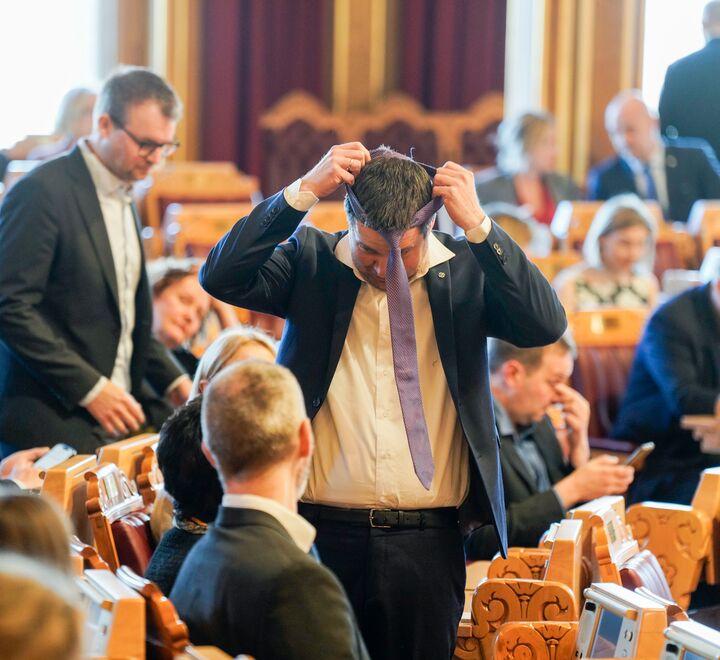
Fredningen av sykelønnsordningen har vart i snart tre tiår. Dyrevelferd og bompenger nevnes i tre ganger så mange taler i Stortinget som sykelønn.
BI Business Review
Slik bestemmer demokratiets portvoktere hvem som velges.

BI Business Review
Kritikerne av forslaget avslører mangel på forståelse for kunnskapsbasert politikk.

BI Business Review
Manglende balanse har konsekvenser for hvilke saker og temaer som løftes opp på Stortingets talerstol.

BI Business Review
Norge er et av få land hvor straffedømte kan stille til valg. Studien vår avdekker et tydelig mønster.
BI Business Review
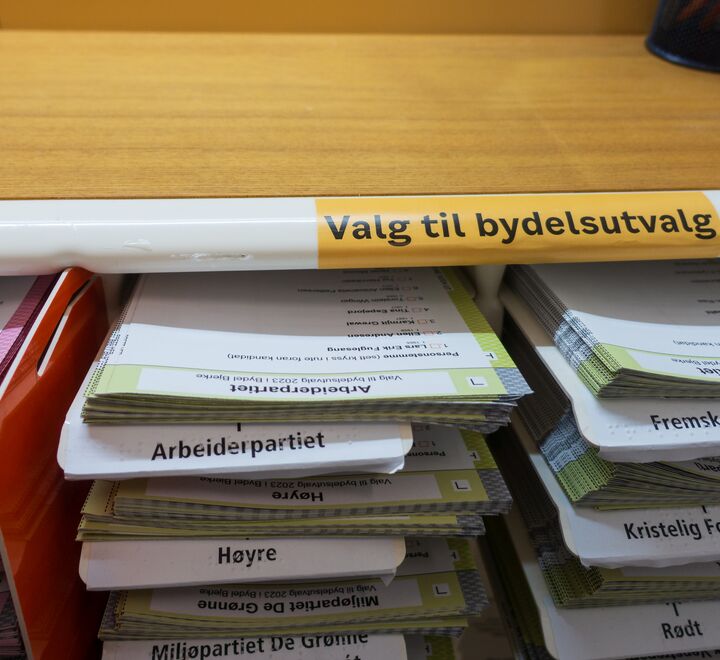
Selv partier som for lengst har innført kjønnskvoter, mangler balanse på toppen av valglistene. Andelen kvinnelige ordførere er også etter høstens valg langt under halvparten.

BI Business Review
Når kvinnelige politikere får barn, faller sannsynligheten for å bli valgt dobbelt så mye som for menn i tilsvarende situasjon.

BI Business Review
Den politiske eliten har stor makt over hvem som rekrutteres og får klatre i den politiske maktstigen. Og partibytte er et rødt felt i stigespillet: rykk tilbake, kanskje helt tilbake til start.
BI Business Review
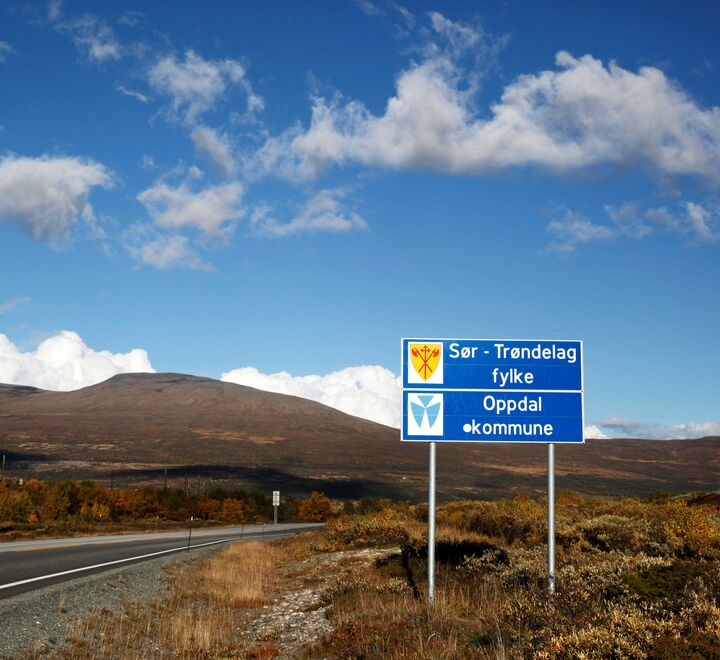
Det er flere gode grunner til å beholde 19 valgdistrikter ved stortingsvalg, men det er lite som tyder på at det er nødvendig for å sikre representasjon fra hele landet.

BI Business Review
Vi har analysert tekst fra 233.000 taler i Stortinget i perioden 1999–2020 for å undersøke i hvilken grad forberedelser til mulige kriser er på den politiske agenda. Resultatet er nedslående.
BI Business Review
Bompengepartiet er nok «årets nykommer», men vil neppe leve veldig lenge. Valgsystemet var i spill i 1919 og endte med et vedtak som har gitt oss partier med lange røtter og sterk partidisiplin.
BI Business Review
Hjemkommunene til representanter fra fylkesordførerens parti får mer penger til veier, kulturhus og idrettsanlegg.