Kim van Oorschot
Professor
Institutt for regnskap, revisjon og foretaksøkonomi
Professor
Institutt for regnskap, revisjon og foretaksøkonomi
Artikkel Kim E. van Oorschot, Thomas Breugem, Iman Parsa, Luk N. Van Wassenhove (2025)
Purpose This paper examines donor interventions aimed at improving the performance of underdeveloped Pathogen Genomic Sequencing (PGS) supply chains in Sub-Saharan Africa. Specifically, we investigate in-kind donations and supply chain management (SCM) capability-building at laboratories performing PGS. In-kind donations have historically been the primary tool used by donor-led initiatives to scale up PGS capacity, while SCM capability-building represents a more recent, complementary strategy. Design/methodology/approach We develop a system dynamics model of the PGS supply chain, grounded in extensive empirical data, to analyze the short- and long-term impacts of each type of intervention. Findings The results reveal a core trade-off: while in-kind donations can mitigate acute shortages, frequent use risks creating dependency and suppressing learning. In contrast, SCM capability-building supports sustainable improvements, particularly when targeted at labs that are unlikely to improve without external support. Research limitations/implications We derive six testable propositions from the analysis and offer a decision framework to support donors in allocating resources more effectively, balancing immediate shortage mitigation with longer-term supply chain improvements. Originality/value By applying a system dynamic modeling approach tailored to the development of PGS supply chains, we capture the nuanced interactions between donor interventions and lab performance, that is: the ability of labs to timely meet disease surveillance needs in their catchment areas. By evaluating both short- and long-term performance impacts of donor interventions, we identify contexts in which each intervention is most effective.
Artikkel Marianne Jahre, Kim E. van Oorschot, Christine Oline Årdal, Eirik Sverrisson, Mikal S. Pettersen, Andreas Wangen (2025)
The purpose of this study is to advance knowledge of the effects of using environmental criteria in the tendering and procurement of pharmaceuticals. In cooperation with the Norwegian Hospital Procurement Trust, we conducted a longitudinal case study of how environmental criteria in the tendering of generic antibiotics were implemented. This case is one of the first attempts to use environmental criteria in generic pharmaceuticals procurement. Qualitative and quantitative data were collected based on interviews, workshops, meetings and secondary sources, followed by iterative analysis, including a case narrative and causal loop diagramming. We found that rewarding environmental criteria fulfilment at the expense of price seems to have multiple effects. Firstly, higher prices increase public spending in the short-term but also help maintain the supply base, which can reduce shortages. Secondly, this increased focus gives more transparency into supplier risks. It is this latter unexpected effect of introducing environmental tendering criteria that makes the case and our analysis particularly interesting. Additionally, in the long term, interviewees expect that increased focus on environmental criteria for specific antibiotics will have the intended effect of reducing transmission of resistant bacteria through improving suppliers’ production processes. Our findings also suggest that increased focus on environmental criteria does not necessarily increase shortages of narrow-spectrum antibiotics, which could unintendedly increase transmission of resistant bacteria. Data from our case study suggest that these two effects are likely to have a positive influence on public health, thereby potentially reducing future healthcare costs.
Kapittel Kim E. van Oorschot, Therese Dille, Jonas Söderlund (2025)
This chapter presents a longitudinal process study of an information systems project and suggests that a hierarchy of sub-projects that belong to the same overall project may trigger unfavorable project behavior. Our findings indicate that project managers run the risk of “balancing” divergent evaluations of sub-projects via an averaging rule, which in turn leads to an overestimation of the overall project performance and consequently negatively impacting project behavior. Based on our case-study findings, we develop a process model explaining the dynamic relationship between hierarchical project structures, managerial decisions, and project behavior. Interestingly, this research shows how hierarchical project structures may hinder rather than support complex task execution, a finding that could help explain the erroneous decision making often observed in troubled projects.
Artikkel Nonhlanhla Dube, Kostas Selviaridis, Kim E. van Oorschot, Marianne Jahre (2024)
We investigate how organizations embedded in a supply system collectively respond to risks and seize opportunities arising from crisis events under shifting forms of uncertainty. Using the United Kingdom (UK) medicine supply system as the research context, we explore how decision-makers navigated the effects of an event with knowable implications (UK's European Union exit, 2016–2020) followed by an event with unknowable implications (COVID-19 global pandemic, 2020–2021). We adopt a longitudinal case research design that incorporates causal loop diagramming, to understand the system's responses. We find that learning evolves as crisis events unfold, changing from surface (know-what) to deep (know-why and -how) and at the highest level, it is transcendent. Transcendent learning entails understanding system effects into the future (i.e., beyond the past and present) and in relation to other supply systems (i.e., beyond the UK system). Capabilities to absorb, avoid, and accelerate away from shocks are developed sequentially as learning changes. We contribute to prior research by developing a theory of system-level strategic agility and the adaptation processes that underpin it. The latter hinge on dynamic resource (re)allocation and the continuous (re)configuration of processes, protocols, regulations, and structures.
Artikkel Kim E. van Oorschot, Vilde Aas Johansen, Nanna Lynes Thorup, Dina Margrethe Aspen (2024)
To analyze whether Global Reporting Initiative (GRI) standards could reduce transparency in sustainability reporting, we performed a longitudinal content analysis of sustainability reports for 15 large Norwegian organizations from 2010 to 2020 (inclusive). The content of reports increased by 90%, in contrast to an increase of only 18% in transparency. The content of GRI standards increased by more than 500%. For further examination, we develop a system dynamics model using a multilevel perspective including the standardization organizations, the organizations writing sustainability reports, and their audiences. Our model demonstrates how multilevel interactions may produce unintended results. More standards could impede transparent reporting for organizations, which in turn hinders stakeholders in making fair judgments about the sustainability of organizations. This condition then may trigger a new cycle in which standardization organizations define even more standards. We conclude that for sustainability reporting standards, less is more. Our findings have implications for both researchers and practitioners.
Artikkel Bob Walrave, Sharon Dolmans, Kim E. van Oorschot, Arno L. P. Nuijten, Mark Keil, Stefan van Hellemond (2022)
Increasingly, the development of today’s “smart” products requires the integration of both software and hardware in embedded systems. To develop these, hardware firms typically enlist the expertise of software development firms to offer integrated solutions. While hardware firms often work according to a plan-driven approach, software development firms draw on Agile development methods. Interestingly, empirically little is known about the implications and consequences of working according to contrasting development methods in a collaborative project. In response to this research gap, we conducted a process study of a collaborative development project involving a software firm and a hardware firm, within which the two firms worked according to contrasting development methods. We found that the software firm was gradually compelled to forgo its Agile method, creating a role conflict in terms of its way of working. As such, our results contribute to the literature on Agile–Stage-Gate hybrids by demonstrating how, in collaborative embedded systems development, hybridization of development methods may cause projects to fail. Our main practical implication entails the introduction of the “sequential Agile approach.”
Artikkel Kim E. van Oorschot, Luk N. van Wassenhove, Marianne Jahre (2022)
Testing for COVID-19 is a key intervention that supports tracking and isolation to prevent further infections. However, diagnostic tests are a scarce and finite resource, so abundance in one country can quickly lead to shortages in others, creating a competitive landscape. Countries experience peaks in infections at different times, meaning that the need for diagnostic tests also peaks at different moments. This phase lag implies opportunities for a more collaborative approach, although countries might also worry about the risks of future shortages if they help others by reallocating their excess inventory of diagnostic tests. This article features a simulation model that connects three subsystems: COVID-19 transmission, the diagnostic test supply chain, and public policy interventions aimed at flattening the infection curve. This integrated system approach clarifies that, for public policies, there is a time to be risk-averse and a time for risk-taking, reflecting the different phases of the pandemic (contagion vs. recovery) and the dominant dynamic behavior that occurs in these phases (reinforcing vs. balancing). In the contagion phase, policymakers cannot afford to reject extra diagnostic tests and should take what they can get, in line with a competitive mindset. In the recovery phase, policymakers can afford to give away excess inventory to other countries in need (one-sided collaboration). When a country switches between taking and giving, in a form of two-sided collaboration, it can flatten the curve, not only for itself but also for others.
Artikkel Kim van Oorschot, Bella B. Nujen, Hans Arthur Solli-Sæther, Deodat Edward Mwesiumo (2022)
This article applies a mixed-method approach to explore the complexities of post-mergers and acquisitions (M&A) integration processes. Extant literature provides significant insights regarding the impact of task and human integration and their influence on post-integration processes. However, the literature often fails to differentiate between subelements of these two dimensions. This article investigates task and human integration in a cross-border M&A aimed at efficiency and innovativeness. We highlight the importance of a clear distinction between two subelements of task integration (product harmonization and structural integration) and show that different interorganizational contexts matter. Consequently, we propose a conceptual framework based on two contextual characteristics—source of synergy and choice of location—suggesting that different integration approaches should be applied simultaneously in different contexts of the same post-M&A organization.
Artikkel Kim E. van Oorschot, Henk A. Akkermans, Luk N. van Wassenhove, Yan Wang (2022)
Purpose Due to the complexity of digital services, companies are increasingly forced to offer their services “in permanent beta”, requiring continuous fine-tuning and updating. Complexity makes it extremely difficult to predict when and where the next service disruption will occur. The authors examine what this means for performance measurement in digital service supply chains. Design/methodology/approach The authors use a mixed-method research design that combines a longitudinal case study of a European digital TV service provider and a system dynamics simulation analysis of that service provider's digital service supply chain. Findings With increased levels of complexity, traditional performance measurement methods, focused on detection of software bugs before release, become fragile or futile. The authors find that monitoring the performance of the service after release, with fast mitigation when service incidents are discovered, appears to be superior. This involves organizational change when traditional methods, like quality assurance, become less important. Research limitations/implications The performance of digital services needs to be monitored by combining automated data collection about the status of the service with data interpretation using human expertise. Investing in human expertise is equally important as investing in automated processes. Originality/value The authors draw on unique empirical data collected from a digital service provider's struggle with performance measurement of its service over a period of nine years. The authors use simulations to show the impact of complexity on staff allocation.
Artikkel Kim van Oorschot, Luk N. Van Wassenhove, Marianne Jahre, Kostas Selviaridis, Harwin de Vries (2022)
The objective of this thought leadership article is to create a systems view of drug shortages based on the perceptions of practitioners and policymakers. We develop a comprehensive framework describing what stakeholders are currently doing when faced with drug shortages and show the outcomes of their actions. In a review of practitioner literature and public reports published from 2010 to 2020, we identify cause-and-effect relationships related to generic drug shortages in six high-income European countries (Belgium, France, the Netherlands, Norway, Sweden, and the UK) in normal times. By combining and connecting data from these different sources, we develop a systems view of the current state. Though several of the associations covered in the systems view are well known, putting them all together and considering their interrelationships is what is offered by this research. Based on this systems view, we derive three basic solution archetypes for drug shortages: (1) let the market handle it; (2) search for alternatives; and (3) bend the rules. The interactions between these archetypes generate causal ambiguity making it harder to understand and solve the problem as the side effects of solutions can be missed. We show how the interaction of archetypes can compromise intended behavior or escalate unintended behavior. However, our systems view allows us to suggest higher-level solution archetypes that overrule such side effects. The basic and higher-order solution archetypes can provide baselines for research and support the development of future interventions.
Artikkel Jan Terje Karlsen, Hans Arthur Solli-Sæther, Kim Van Oorschot, Anne Live Vaagaasar (2021)
This article presents a study of two projects focusing on the relationships of two Nordic clients with suppliers in low-cost countries. It explores the interplay between trust and control when offshoring information systems development projects. The key insight reveals that trust is not a substitute for control, no matter its level. The paper offers several contributions. First, we build a conceptual model for exploring the relationship between trust and control and the role of actual project performance. Second, the study reveals that trust supports a team's willingness to share knowledge, and control facilitates its ability to do so. Furthermore, our analysis shows that the impact of trust and control on project performance is better managed through the adjustment of project goals instead of adjusting the levels of trust and control. Finally, we contribute to theory through the development of a causal model of trust, control, actual performance, and project goals.
Artikkel Harwin de Vries, Marianne Jahre, Kostas Selviaridis, Kim Van Oorschot, Luk N. Van Wassenhove (2021)
Purpose –This “impact pathways”paper argues that operations and supply chain management (OSCM) could help address the worsening drug shortage problem in high-income countries. This significant societal problem poses difficult challenges to stakeholders given the complex and dynamic nature of drug supply chains. OSCM scholars are well positioned to provide answers, introducing new research directions for OSCM in the process. Design/methodology/approach –To substantiate this, the authors carried out a review of stakeholder reports from six European countries and the academic literature. Findings–There is little academic research and no fundamental agreement among stakeholders about causes of shortages. Stakeholders have suggested many government measures, but little evidence exists on their comparative cost-effectiveness. Originality/value –The authors discuss three pathways of impactful research on drug shortages to which OSCM could contribute: (1) Developing an evidence-based system view of drug shortages; (2) Studying the comparative cost-effectiveness of key government interventions; (3) Bringing supply chain risk management into the government and economics perspectives and vice versa. Our study provides a baseline for future COVID-19-related research on this topic
Artikkel Petter Gottschalk, Kim Van Oorschot (2021)
Commitment to goals can escalate to such an extent that it encourages deviant behaviour even after detection of a crime. A case study illustrates how detection of environmental crime in one country led to environmental crime in another country. The Probo Koala tanker ship was to deliver another shipment of coker gasoline waste to the Ivory Coast, and her sister ship, Probo Emu, both owned by Trafigura, was preparing for the same journey. Trouble started when the illegal waste shipment was detected. Trafigura management quickly found an alternative destination for the waste, where an explosion harming local citizens occurred. The case of redirecting the tanker ship to Norway is studied as a dark project by application of convenience theory, which suggests that offenders have financial motives, organizational opportunities, as well as willingness for deviant behavior caused by escalating commitment to illegal behavior to reach goals such as getting rid of the hazardous waste.
Kapittel Joe Viana, Kim E. van Oorschot, Christine Oline Årdal (2021)
The objective of the proposed hybrid simulation modeling framework is to improve the understanding and operation of medicine supply chains, to strengthen their resilience to ensure the availability of medicines. The framework draws upon hybrid simulation, supply chain resilience and medicine supply chain literature. The utility of the proposed framework is presented through the development of a case model of a generic (off-patent) case medicine in the Norwegian system to perform scenario-based experiments on disruption events and interventions. Two disruption scenarios are evaluated a demand shock e.g., hoarding, and a supply shock, e.g., a major disruption at a key supplier. The effect of these disruptions on the system without interventions is compared with proactive and reactive interventions, namely prepositioned stock, and flexible ordering. Future directions for framework development have been identified.
Artikkel Morten Juel Hansen, Hajnalka Vaagen, Kim Van Oorschot (2020)
In concurrent engineering projects driven by short delivery times, team performance rests on the team’s capability to quickly and effectively handle different, emergent issues. We conducted an exploratory study of a large, dynamically complex project in which team members had a record of “good problem-solving abilities.” The study revealed how the team members demonstrated a collective ability to swiftly handle emergent issues, which again decreased the intensity of time and performance pressure. Beyond formal processes combined with lean practices, supporting this ability were situation awareness, task-based subgroups, direct lines of communication, and trust.
Artikkel Kim Van Oorschot, Yan Wang, Henk Akkermans (2018)
Artikkel Kim van Oorschot, Hans Solli-Sæther, Jan Terje Karlsen (2018)
Western multinational corporations (MNCs) that want market access in China have to share knowledge with Chinese partners. This may expose them to imitation, so MNCs prefer to protect knowledge resulting in a strategic paradox: MNCs have to both share and protect knowledge. To analyse this paradox, we developed a theoretical conceptual model capturing the tensions and feedback cycles of this paradox. Next, based on data from the shipbuilding industry, a system dynamics model was developed to simulate the long-term effects of sharing and protecting strategies. The results indicate that protection is detrimental to long-term success, because it undercuts the trust of the Chinese supplier and irreparably reduces innovation rates. Knowledge protection thus reduces instead of increases the ability to share (new) knowledge in the future. A sharing strategy increases imitation, but also trust and knowledge sharing by the Chinese partner, such that it enhances the MNC's innovation rate and long-term performance.
Kapittel Henk Akkermans, Kim Van Oorschot (2018)
Artikkel Kim Van Oorschot, Kishore Sengupta, Luk N. Van Wassenhove (2018)
Artikkel Angele Pieters, Kim Van Oorschot, Henk Akkermans, Sally Brailsford (2018)
Kapittel Kim van Oorschot (2017)
Artikkel Bob Walrave, A. Georges L. Romme, Kim van Oorschot, Fred Langerak (2017)
Managerial attention to exploitation and exploration has a strong influence on organizational performance. However, there is hardly any knowledge about whether senior managers need to adjust their distribution of attention to exploitation and exploration in response to major changes in demand patterns in their industry. Drawing on the analysis of a panel data set of 86 firms in the information technology industry exposed to an economic recession and recovery, we find that successfully navigating an economic downturn demands more managerial attention to exploration, while leveraging the subsequent upswing requires more attention to exploitation. As such, this study contributes to the literature by providing a dynamic perspective on ambidexterity: that is, senior managers need to redistribute their attention to exploration and exploitation to effectively meet the changing environmental demands over time.
Artikkel Kim van Oorschot, Katrin Eling, Fred Langerak (2017)
Stage‐wise timing of new product development (NPD) activities is advantageous for a project's performance. The literature does not, however, specify whether this implies setting and adhering to a fixed schedule of gate meetings from the start of the project or allowing flexibility to adjust the schedule throughout the NPD process. In the initial project plan, managers and/or development teams often underrate the time required to complete the project because of task underestimation. Although the level of task underestimation (i.e., the unknown) is not identifiable at the start of the project, our study argues that project managers and/or teams can manage the unknown by measuring three project conditions (i.e., the knowns) during front‐end execution, and use their values to select the best gate timing strategy. These project conditions entail: (i) the number of unexpected tasks discovered during the front‐end, (ii) the willingness of customers to postpone their purchase in case the execution of these unexpected tasks would lead to a delayed market launch, and (iii) the number of unexpected tasks discovered just before the front‐end gate. Together these conditions determine whether a more fixed or more flexible gate timing strategy is most appropriate to use. The findings of a system dynamics simulation corroborate the supposition that the interplay between the three project conditions measured during front‐end execution determines which of four gate timing strategies with different levels of flexibility (i.e., one fixed, one flexible, and two hybrid forms) maximizes new product profitability. This finding has important implications for both theory and practice as we now comprehend that the knowns can be used to manage the unknown.
Artikkel Kim van Oorschot, Luk N. Van Wassenhove, Kishore Sengupta, Henk Akkermans (2016)
Artikkel Henk Akkermans, Kim van Oorschot (2016)
Artikkel Hans Solli-Sæther, Jan Terje Karlsen, Kim van Oorschot (2015)
Artikkel Bob Walrave, Kim van Oorschot, Sjoerd Romme (2015)
Artikkel Kim E. van Oorschot, Therese Dille, Jonas Söderlund (2014)
Artikkel Tarek Abdel-Hamid, Felix Ankel, Michele Battle-Fisher, Bryan Gibson, Gilberto Gonzalez-Parra, Mohammed Jalali, Kirsikka Kapainen, Nishan Kalupahana, Ozge Karanfil, Achla Marathe, ... (2014) Brian Martinson, Karma McKelvey, Suptendra Nath Sarbadhikari, Stephen Pinauro, Patrick Poucheret, Nicolaas Pronk, Ying Qian, Edward Sazonov, Kim van Oorschot, Akshay Venkitasubramanian, Philip Murphy (2014) Vis alle forfattere
Artikkel Elco van Burg, Kim van Oorschot (2013)
Artikkel Kim van Oorschot (2013)
Kapittel Kim van Oorschot (2013)
Artikkel Kim van Oorschot, Henk Akkermans, Kishore Sengupta, Luk N. Van Wassenhove (2013)
Artikkel Kim van Oorschot (2013)
Artikkel Lydie Smets, Kim van Oorschot, Fred Langerak (2013)
Artikkel Kim van Oorschot (2013)
Artikkel Kim van Oorschot, Therese Dille (2012)
Artikkel Kim van Oorschot, F. Langerak, Kishore Sengupta (2011)
Artikkel Kim van Oorschot (2011)
Kapittel Henk Akkermans, Kim van Oorschot, Winfried Peeters (2011)
Kronikk Kim Van Oorschot (2018)
Kronikk Kim van Oorschot, Jan Terje Karlsen, Hans Solli-Sæther (2017)
Kronikk Jan Terje Karlsen, Hans Solli-Sæther, Kim van Oorschot, Anne Live Vaagaasar (2015)
Kronikk Kim van Oorschot, Hans Solli-Sæther, Jan Terje Karlsen (2014)
Konferanseforedrag Marcus Nikolay Vatne, Hans Arthur Solli-Sæther, Bella Belerivana Berivan Nujen, Kim E. van Oorschot (2024)
Konferanseposter Marcus Nikolay Vatne, Hans Arthur Solli-Sæther, Bella Belerivana Berivan Nujen, Kim E. van Oorschot (2024)
Konferanseforedrag Kim E. van Oorschot, Bella B Nujen, Hans Solli-Sæther (2024)
Konferanseforedrag Kim E. van Oorschot, Marianne Jahre, Lena Elisabeth Bygballe, Erna Engebrethsen, Bente Merete Flygansvær (2024)
Konferanseforedrag Kim E. van Oorschot, Thomas Breugem, Iman Parsa, Luk N. Van Wassenhove (2024)
Konferanseforedrag Marianne Jahre, Kim E. van Oorschot, Mikal Pettersen, Eirik Sverrisson, Andreas Wangen, Christine Oline Årdal (2023)
Konferanseforedrag Kim E. van Oorschot (2023)
Konferanseforedrag Kim E. van Oorschot, Thomas Breugem, Iman Parsa, Luk N. Van Wassenhove (2023)
Konferanseforedrag Kim E. van Oorschot, Bella B Nujen, Hans Solli-Sæther (2023)
Konferanseforedrag Kim van Oorschot (2022)
Konferanseforedrag Erna S. Engebrethsen, Kim van Oorschot (2022)
Konferanseforedrag Joe Viana, Marianne Jahre, Christine Oline Årdal, Kim E. van Oorschot (2021)
Rapport Harwin de Vries, Marianne Jahre, Kostas Selviaridis, Kim Van Oorschot, Luk N. Van Wassenhove (2021)
High-income countries are facing a significant and worsening drug shortage problem. This position paper argues that operations and supply chain management (OSCM) could (and perhaps should) be used more widely to help address this issue: 1) the problem has significant societal impacts, 2) it poses complex questions for stakeholders and finding answers is challenging due to the complex and dynamic nature of drug supply chains, 3) OSCM scholars are well positioned to provide answers, and 4) the problem introduces fundamentally new research directions for OSCM. To substantiate this, we carried out a review of key stakeholder reports from six European countries and a systematic review of academic literature. These show that there is no real agreement among stakeholders about what causes the shortages and that there are few academic studies that examine this. We also show that stakeholders have suggested many different government measures – ranging from ‘reshoring production’ to revising procurement policies and increasing stock levels – but that there is little research that provides evidence on their comparative cost-effectiveness. Based on our findings, we discuss three promising research directions to which our discipline could contribute.
Konferanseforedrag Joe Viana, Marianne Jahre, Christine Oline Årdal, Kim E. van Oorschot (2021)
Rapport Luk N. Van Wassenhove, Kim Van Oorschot (2020)
Artikkel Kim Van Oorschot (2020)
Konferanseforedrag Bella B. Nujen, Hans Solli-Sæther, Kim Van Oorschot, Deodat Edward Mwesiumo (2020)
Artikkel Kim Van Oorschot (2019)
Foredrag Kim Van Oorschot (2018)
Konferanseforedrag Kim Van Oorschot (2018)
Foredrag Kim Van Oorschot (2018)
Artikkel Kim van Oorschot (2017)
Artikkel Kim Van Oorschot, Jan Terje Karlsen, Hans Arthur Solli-Sæther (2017)
Artikkel Kim van Oorschot (2016)
Bokkapittel Kim van Oorschot (2016)
Konferanseforedrag Bob Walrave, sharon dolmans, Kim van Oorschot, stefan van hellemond (2016)
Konferanseforedrag Kim van Oorschot, Katrin Eling, Fred Langerak (2015)
Artikkel Kim van Oorschot (2015)
Artikkel Jan Terje Karlsen, Hans Solli-Sæther, Hans Solli-Sæther, Kim van Oorschot, Anne Live Vaagaasar (2015)
Artikkel Anne Live Vaagaasar, Kim Van Oorschot, Jan Terje Karlsen (2015)
Konferanseforedrag Jan Terje Karlsen, Hans Solli-Sæther, Kim van Oorschot (2015)
Konferanseforedrag Kim van Oorschot, Hans Solli-Sæther, Jan Terje Karlsen (2014)
Konferanseforedrag Bob Walrave, Kim van Oorschot, Sjoerd Romme (2014)
Konferanseforedrag Kim van Oorschot, Therese Dille, Jonas Söderlund (2014)
Konferanseforedrag Bob Walrave, Kim van Oorschot, Sjoerd Romme (2013)
Artikkel Hans Solli-Sæther, Jan Terje Karlsen, Anne Live Vaagaasar, Kim van Oorschot (2013)
Konferanseforedrag Kim van Oorschot, Hans Solli-Sæther, Jan Terje Karlsen (2013)
Konferanseforedrag Hans Solli-Sæther, Jan Terje Karlsen, Kim van Oorschot (2013)
Konferanseforedrag Hans Solli-Sæther, Kim van Oorschot, Jan Terje Karlsen (2013)
Konferanseforedrag Hans Solli-Sæther, Anne Live Vaagaasar, Kim van Oorschot, Jan Terje Karlsen (2013)
Konferanseforedrag Kim van Oorschot, Kishore Sengupta, Luk N. Van Wassenhove, Henk Akkermans (2013)
Konferanseforedrag Angele Pieters, Kim van Oorschot, Henk Akkermans, Sally Brailsford (2013)
Konferanseforedrag Kim van Oorschot, Henk Akkermans (2012)
Konferanseforedrag Henk Akkermans, Kim van Oorschot (2012)
Konferanseforedrag Lydie Smets, Kim van Oorschot, Fred Langerak (2012)
Konferanseforedrag Kim van Oorschot (2012)
Konferanseforedrag Angele Pieters, Kim van Oorschot, Henk Akkermans (2012)
Konferanseforedrag Lydie Smets, Kim van Oorschot, Fred Langerak (2012)
Bokkapittel Kim van Oorschot (2012)
Konferanseforedrag Kim van Oorschot, Kishore Sengupta, Henk Akkermans, Luk N. van Wassenhove (2012)
Konferanseforedrag Kim van Oorschot (2012)
Konferanseforedrag Lydie Smets, Kim van Oorschot, Fred Langerak (2011)
| År | Akademisk institusjon | Grad |
|---|---|---|
| 2001 | Eindhoven University of Technology | Ph.D. |
| 1996 | Eindhoven University of Technology | Master of Science |
| År | Arbeidsgiver | Tittel |
|---|---|---|
| 2016 - Present | BI Norwegian Business School | Professor |
| 2020 - 2021 | NTNU Department of International Business | Adjunct Professor (Professor II) |
| 2013 - 2017 | CEDEP | Guest lecturer |
| 2011 - 2016 | BI Norwegian Business School | Associate Professor |
| 2011 - 2013 | INSEAD | Guest lecturer |
| 2008 - 2011 | Eindhoven University of Technology | Assistant Professor |
| 2007 - 2008 | University of Tilburg | Post-Doc |
| 2006 - 2007 | INSEAD | Research Fellow |
| 2002 - 2006 | Minase Consulting BV | Consultant |
| 2001 - 2002 | Eindhoven University of Technology | Post-Doc |
BI Business Review
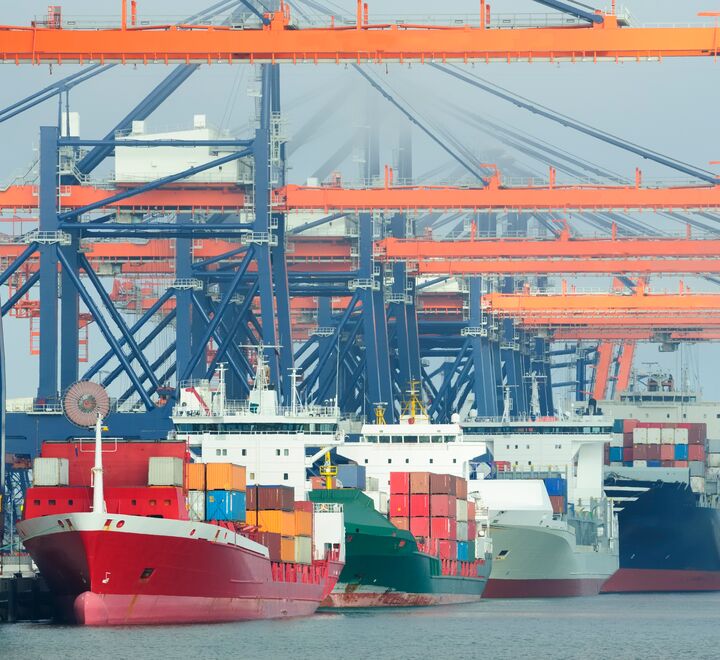
Når forsyningskjedene svikter, merker vi det raskt – enten det er tomme apotekhyller, forsinkede leveranser eller mangel på kritiske varer. Ny forskning viser at løsningen ligger i å utvikle strategisk smidighet.

BI Business Review
Systemer som skal hjelpe oss til å ha kontroll og styring over store prosjekter, kan skape trøbbel og bidra til budsjettsprekk.

BI Business Review
Skal du lykkes i Kina, er det bedre å dele kunnskap enn å forsøke å beskytte den, viser studie.
BI Business Review
Hvordan kan prosjektledere få bedre kontroll over ukjente faktorer som dukker opp? Professor Kim van Oorschot forklarer hvordan man kan oppnå suksess med prosjekter.
BI Business Review
Norske bedrifter setter i dag ut prosjekter til lavkostland i stadig større omfang. Kan de stole på leverandøren?