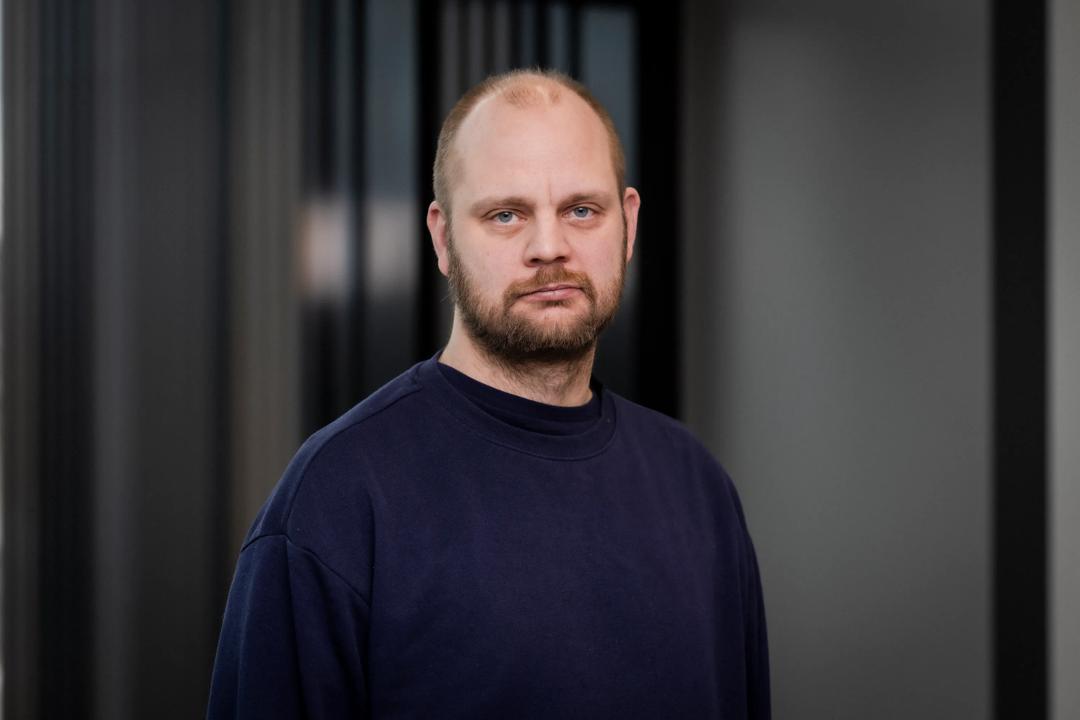
Linda Lai
Professor
Institutt for ledelse og organisasjon
Professor
Institutt for ledelse og organisasjon
Artikkel Linda Lai (2023)
The present study expands previous research on the effects of power on stereotyping by investigating the impact of two types of power (social power and personal power) on two universal dimensions of social perception; warmth and competence. Results from an experiment (N = 377) in which participants were randomly assigned to provide their impression of either (1) poor people or (2) rich people, suggest that the two types of power produce different effects on perceptions of warmth and competence. Personal power increased stereotype consistent perceptions of warmth whereas social power increased stereotype consistent perceptions of competence as well as agency, which was identified as a separate dimension. The pattern of results is discussed in view of previous work on power effects and stereotyping, and potential explanations and suggestions for future research are outlined.
Artikkel Linda Lai, Lewend Mayiwar (2023)
The present paper reports an independent and better powered (N = 847 vs. N = 85) replication of Experiment 3 in Glikson et al. (2018). The authors of the original study reported support for their proposition that due to perceptions of (in)appropriateness, the use of smileys may backfire and produce less favorable perceptions of competence in a formal work-related setting, yet more favorable perceptions of warmth in an informal work-related setting. Our results, in contrast, indicated that smileys produce a negative effect on perceptions of competence and a positive effect on perceptions of warmth, regardless of the level of formality. Moreover, our results did not support the reported moderated mediation model involving perceptions of appropriateness. Potential explanations for the discrepancies in results are discussed. We provide data, code, and materials on https://osf.io/n7yc4/.
Artikkel Linda Lai (2023)
Artikkel Elizabeth Solberg, Linda Lai, Anders Dysvik (2021)
Intrinsic motivation is held as critical for employees’ willingness to be flexible (WTBF). Yet empirical research suggests that employees who find work intrinsically satisfying could resist work changes. In this study, we predict that the relationship between intrinsic motivation and employees’ WTBF will become more positive as intrinsic motivation advances beyond moderate levels. We also examine the role developmental supervisor support plays in generating the critical threshold of intrinsic motivation needed for it to be positively related with WTBF. Our study provides insight into how and when intrinsic motivation increases employees’ WTBF and into the degree of developmental support needed to facilitate a positive relationship between these variables.
Artikkel Lewend Mayiwar, Linda Lai (2019)
We performed an independent, direct, and better powered (N = 295) replication of Study 1, an experiment (N = 113) by Lammers, Stoker, and Stapel (2009). Lammers and colleagues distinguished between social power (influence over others) and personal power (freedom from the influence of others), and found support for their predictions that the two forms of power produce opposite effects on stereotyping, but parallel effects on behavioral approach. Our results did not replicate the effects on behavioral approach, but partially replicated the effects on stereotyping. Compared to personal power, social power produced less stereotyping, but neither form of power differed significantly from the control condition, and effect sizes were considerably lower than the original estimates. Potential explanations are discussed.
Artikkel Linda Lai (2014)
Antologi Linda Lai (2014)
Artikkel Audun Farbrot, Linda Lai (2014)
Artikkel Linda Lai, Audun Farbrot (2014)
Artikkel Linda Lai (2013)
Artikkel Linda Lai (2011)
Artikkel Linda Lai (2010)
Artikkel Linda Lai, Janne Kapstad (2009)
Artikkel Linda Lai (2005)
Kapittel Linda Lai (2004)
Kapittel Linda Lai (2003)
Artikkel Linda Lai, Moshe Farjoun (1997)
Artikkel Linda Lai, Kjell Grønhaug (1994)
Artikkel Linda Lai (1994)
Kronikk Linda Lai (2024)
Kronikk Linda Lai (2023)
Kronikk Linda Lai (2022)
Kronikk Linda Lai (2021)
Kronikk Linda Lai (2020)
Kronikk Linda Lai (2019)
Kronikk Linda Lai (2018)
Kronikk Linda Lai (2017)
Kronikk Linda Lai (2016)
Kronikk Linda Lai (2015)
Intervju Linda Lai (2007)
Fagbok Linda Lai (2021)
Bokkapittel Øyvind L. Martinsen, Linda Lai (2017)
Bokkapittel Linda Lai (2017)
Konferanseforedrag Elizabeth Solberg, Linda Lai (2016)
Foredrag Benja Stig Fagerland, Linda Lai (2014)
Foredrag på Professor Linda Lai´s boklansering.
Artikkel Linda Lai, Audun Farbrot (2013)
Artikkel Linda Lai (2013)
Fagbok Linda Lai (2013)
Artikkel Linda Lai (2013)
Kommentar Linda Lai, Anders Dysvik (2012)
Artikkel Linda Lai (2012)
Artikkel Linda Lai (2011)
Fagbok Linda Lai (2004)
Fagbok Linda Lai (1999)
| År | Akademisk institusjon | Grad |
|---|---|---|
| 1991 | Nowegian School of Economics, NHH | Ph.D Dr. Oecon. |
| 1986 | BI Norwegian Business School | Master of Science in Business |
| År | Arbeidsgiver | Tittel |
|---|---|---|
| 2010 - Present | BI Norwegian Business School | Professor |
| 1992 - 2011 | BI Norwegian Business School | Associate Professor |
| 1992 - 1992 | University of Illinois at Champaign-Urbana (USA) | Guest Professor |
| 1991 - 1991 | BI Norwegian Business School | Post Doctoral Fellow |
| 1987 - 1991 | BI Norwegian Business School | PhD candidate |
| 1990 - 1990 | University of Illinois at Champaign-Urbana (USA) | Research Fellow |

BI Business Review
Selv om bruk av kunstig intelligens blir stadig vanligere, kan åpenhet om det straffe seg, viser ny forskning. Men hva skjer på sikt?

BI Business Review
Ledere avviser ofte kreative ideer fra medarbeiderne for å beskytte sin sosiale status, viser ny forskning.

BI Business Review
Unge med lederambisjoner møter ofte negative fordommer, og stadig flere ledere er menn over 55.

BI Business Review
Bruk av kunstig intelligens ved rekruttering påvirker ikke bare hvem som blir valgt, men også hvem som søker, viser ny forskning.

BI Business Review
Medarbeidere som vil signalisere at de har fri, blir ofte sett på som mindre lojale.
BI Business Review
Ny forskning kaster lys over effektene av at ledere viser usikkerhet.

BI Business Review
Ny forskning kaster lys over betydningen av omgjengelighet hos ledere.
BI Business Review
Bullshit er ikke det samme som løgn, men svekker grunnlaget for en effektiv organisasjon.
BI Business Review
Det er ikke uten grunn at så mange velger å jobbe for «dårlige» ledere.
BI Business Review
Kvinnelige ledere blir ofte vurdert som bedre enn mannlige ledere. Men er de det?
BI Business Review
Mange medarbeidere er positive til fire dagers arbeidsuker. På visse betingelser.
BI Business Review
Latterliggjøring, utskjelling og annen fiendtlig lederadferd kan faktisk bli oppfattet som bare «tøff kjærlighet» av medarbeidere, ifølge ny forskning.