Donatella De Paoli
Førsteamanuensis
Institutt for ledelse og organisasjon
Førsteamanuensis
Institutt for ledelse og organisasjon
Antologi Donatella De Paoli (2023)
Artikkel Donatella De Paoli (2020)
Artikkel Federica De Molli, Donatella De Paoli (2020)
Following the spatial turn in organisation studies, this research attempts to investigate the relation between designed organisational space and organisational control. In particular, the study explores how middle managers experience control in open-plan offices and how this affects their feelings and daily work activities. Through a study of a major Norwegian telecom company - which has redesigned its headquarters, transforming them from traditional closed offices to open-plan offices - this paper illustrates the experience of ambivalence felt by middle managers in the studied environment, which is perceived by managers as a tension between feeling empowered and in control versus feeling trapped and controlled. We illustrate how this ambivalence emerges through the interplay of various feelings connected to seduction, equality, performance evaluation, enacting control and being controlled, frustration and the need to escape. The findings show how this contradictory experience negatively affects middle managers' daily work activities.
Kapittel Federica De Molli, Donatella De Paoli (2020)
Artikkel Sigrid Røyseng, Donatella De Paoli, Grete Wennes (2019)
The aim of this article is to study the effects of performance measurement on professional autonomy in the Norwegian theater sector and how these effects have changed over two decades, from the 1990s to the 2010s. We do this by introducing the concepts of decoupling and disciplinary power and by studying the dialogue between five case theaters and the Ministry of Culture as part of the system of Management by Objectives. We find effects both related to processes of decoupling and disciplinary power in this period, but the decoupling effects seem to be most notable in the first part of the period of the study. Consequently, we must also conclude that - though not totally in danger - the professional autonomy of the theaters was increasingly challenged during this period.
Artikkel Anne Live Vaagaasar, Ralf Josef Müller, Donatella De Paoli (2019)
The purpose of this paper is to investigate the triadic relationship between project workspace (i.e. spatial context), project type and project manager’s leadership style. It develops the concept of leadership construct (i.e. mental models of leadership to predispose the way leadership is performed) to explain related preferences for workspace and behaviors.
Artikkel Donatella De Paoli, Erika Sauer, Arja Ropo (2017)
This paper examines office design as a spatial context of organizations. Organizations increasingly invest in designing workspaces to support employee creativity, foster company innovation and communicate a positive company image. This paper takes a critical view of this ‘hype’ by describing and analysing images of the headquarters of allegedly ‘creative workspaces’ published on the Internet across a broad range of industries and corporations. Our analysis shows how their design follows standardized or stereotypical approaches to nurturing creativity: playfully or artistically designed open spaces, environments reminiscent of home, sports and play, nature, past/future technologies, or culturally aligned symbols. We discern underlying connections between office spaces and creativity, suggesting that creativity flourishes in happy, relaxed and playful communities within close-knit teams. We then identify three contradictions in relation to the existing literature on creativity and workspaces: individually versus collectively produced creativity; professionally designed workspaces versus workspaces created through participation; and planned versus emerging creativity.
Artikkel Sigrid Røyseng, Grete Wennes, Donatella De Paoli (2017)
Kunsten har blitt karakterisert som det økonomiske feltet snudd på hodet (Bourdieu 1993). Å rette seg etter det som er økonomisk gunstig, har ikke alltid vært gangbart om man skal lykkes i kunstens verden. Like fullt, og i økende grad, må også kunstinstitusjoner fokusere på kostnadseffektivitet og sørge for å ha orden på de økonomiske og administrative sidene ved sin drift. Innføringen av mål- og resultatstyring i 1996, som ledd innføringen av nytt økonomireglement i staten og tilhørende den omfattende New Public Management-reformen(e), er en markant endring hvor hensynet til kostnadseffektivitet er blitt tydelig forsterket. Systemet med mål- og resultatstyring (MRS) og kunst representerer på mange måter ulike verdisystemer. Mens mål- og resultatstyring representerer verdier som kontroll, kostnadseffektivitet, regelfølging og planmessighet, representerer kunst verdier som kreativitet, nyskaping, estetiske regelbrudd og rom for det uventede. Følgelig blir spørsmålet: Hvordan berører og påvirker innføringen av systemet med mål- og resultatstyring forholdet mellom de kunstneriske og økonomisk-administrative sidene i kunstinstitusjoner? I denne artikkelen undersøker vi nettopp dette og ser nærmere på perioden fra to år før systemet ble innført i 1996 og fram til 2012. Mer spesifikt presenterer artikkelen en longitudinell studie av hva innføringen av systemet med mål- og resultatstyring har betydd for norske institusjonsteatre.
Artikkel Donatella De Paoli, Arja Ropo (2017)
Purpose The purpose of this paper is to explore the current trend of designing workspaces to foster creativity. The paper brings forth themes that seem to be connected with the so-called ‘creative workspaces’. The paper discusses how the findings relate to recent theory and research. Finally, the paper develops propositions to further elaborate the issue. Design/methodology/approach The paper adopts an inductive and social constructionist approach. In all, 40 internet pictures of workspaces claimed to be creative among a broad range of industries and companies which were analyzed through an aesthetic lens and compared to what theory and research about organizational creativity and space inform us. Findings The designs of ‘creative workspaces’ follow a rather standardized and deterministic assumption of what kind of spaces are considered to produce creativity: open offices, happy, playful communities of close-knit teams and spatial arrangements that resemble home, symbols and memories, sports, technology and nature. This view of creativity and workspaces remains a management fad unless a more balanced approach to the issue is assumed. Research limitations/implications The sample is not to be representative and the findings generalizable as such, but to bring forth the phenomenon. This exploratory and inductive approach calls for a systematic study to prove the propositions in a more controlled research setting and with a bigger sample. Practical implications The paper makes a few suggestions of what companies should pay attention to when building workspaces to improve organizational creativity – and to overcome the fad. Social implications The proposed end-user perspective may ultimately save costs, if people can voice their needs on the space arrangements from the beginning and throughout the building process, not only after the spaces are fully complete, as is typically the case. Originality/value The paper provides a critical view on the trend of building work spaces to purposefully enhance organizational creativity. It brings forth themes that are connected to creativity and workspace designs and suggests that more nuances are involved in the issue.
Kapittel Arja Ropo, Donatella De Paoli, Ralph Bathurst (2017)
Artikkel Donatella De Paoli, Sigrid Røyseng, Grete Wennes (2017)
In this article, we seek inspiration from the performative theatre arts to better understand creative work and leadership in a digital age. Theatre artists work and lead creative processes toward theatre performances without any digital distractions. Theatres are a physical manifestation of art. The aesthetic and embodied creative work and leadership is essential for a play that engages and touches the audience. While theories and research about embodied leadership scarcely address digitalization or technology, research about digital and virtual leadership oversees the importance of embodied processes and leadership. Through insight acquired by interviewing theatre directors, we describe how these creative work and leadership processes are about developing and maintaining embodied, emotional and mental focus. We explain and analyse this phenomenon through a description and analysis of theatre art and theatre leadership, where we argue that theatre productions resemble many kinds of temporary creative projects in regular work organizations. Theatre directors lead people in a way that makes theatres one of the last frontiers of digitalization. We also explain what there is to learn from theatres in a digitalized work life, where smart phones, I-pads, PCies or other digital devices never are turned off.
Kapittel Terje Gaustad, Donatella De Paoli (2017)
Kapittel Donatella De Paoli (2015)
Artikkel Donatella De Paoli, Arja Ropo (2015)
Akademisk bok Arja Ropo, Perttu Salovaara, Erika Sauer, Donatella De Paoli (2015)
Kapittel Donatella De Paoli, Arja Ropo, Erika Sauer (2014)
Artikkel Donatella De Paoli (2014)
Artikkel Donatella De Paoli, Kirsten Arge, Siri Hunnes Blakstad (2013)
Kapittel Donatella De Paoli (2012)
Artikkel Tor Grenness, Donatella De Paoli (2012)
Kapittel Trine Bille, Donatella De Paoli (2012)
Kapittel Donatella De Paoli (2010)
Artikkel Donatella De Paoli (2009)
Antologi Beate Elstad, Donatella De Paoli (2008)
Artikkel Donatella De Paoli (2006)
Artikkel Anne-Britt Gran, Donatella De Paoli (2005)
Kapittel Anne-Britt Gran, Donatella De Paoli, Jørgen Langdalen, Anne Danielsen (2003)
Kapittel Donatella De Paoli (2003)
Kapittel Donatella De Paoli, Kirsten Arge (2001)
Intervju Gunvor Marie Dyrdal, Donatella De Paoli (2024)
Deltakelse i media Øyvind Kvalnes, Donatella De Paoli (2021)
Intervju Donatella De Paoli (2018)
Deltakelse i media Donatella De Paoli (2018)
Intervju Donatella De Paoli (2018)
Intervju Donatella De Paoli (2016)
Kronikk Sigrid Røyseng, Terje Gaustad, Irina Eidsvold-Tøien, Donatella De Paoli (2016)
Intervju Donatella De Paoli, Fermariello Ugo (2015)
Deltakelse i media Donatella De Paoli (2015)
Intervju Donatella De Paoli (2014)
Deltakelse i media Donatella De Paoli (2014)
Kronikk Terje Gaustad, Donatella De Paoli (2014)
Intervju Donatella De Paoli (2014)
Kronikk Donatella De Paoli (2014)
Kronikk Donatella De Paoli, Terje Gaustad (2014)
Intervju Donatella De Paoli (2012)
Intervju Donatella Maria De Paoli (2011)
Konferanseforedrag Heidi Angell, Donatella De Paoli (2025)
This paper explores how creative entrepreneurs nurture creativity when working alone. As remote work has become commonplace after the COVID-19 pandemic, new questions arise about how non-traditional environments—such as home offices, natural surroundings, and cafés—support creative thinking. Drawing on interviews with ten creative entrepreneurs in the High North conducted over 18 months, and using photo-elicitation as a method, we examine how solitude and everyday spaces foster inspiration. The findings reveal that creativity often emerges through four experiential modes: wondering, playing, nurturing, and embracing serenity. These moments occur in intimate and emotionally charged settings rather than in purpose-designed creative offices. The study contributes to creativity and workspace research by shifting attention from organisationally planned “innovation spaces” toward the private and natural environments where creative entrepreneurs work and reflect. It highlights how awareness, emotion, and embodied connection to place sustain creativity in solitude and suggests that fostering creative potential may depend less on spatial design and more on trusting creators’ ability to find inspiration in the ordinary.
Konferanseforedrag Heidi Angell Strøm, Donatella De Paoli (2022)
Konferanseforedrag Donatella Maria De Paoli (2022)
Konferanseforedrag Terje Gaustad, Lukas Erni, Donatella De Paoli (2021)
Konferanseforedrag Lene Foss, Donatella De Paoli (2019)
Konferanseforedrag Donatella De Paoli, F De Molli (2019)
Konferanseforedrag Donatella De Paoli (2018)
Konferanseforedrag Laura E. Mercer Traavik, Donatella De Paoli (2018)
Konferanseforedrag Terje Gaustad, Donatella De Paoli (2017)
Konferanseforedrag Donatella De Paoli, Arja Ropo (2017)
Through the case of an international telecom company, investing in grandiose elegant facilities and implementing open-plan offices, we tell the story of how middle-level managers are at the same time seduced and suppressed. Using a spatial power and control organizational perspective, we analyze interview data of 20 middle-level managers across functions and show how the architecture and open-plan offices are creating ‘illusions of control’. Middle-level managers feel free, empowered and in control in the open-plan offices, while at the same time being controlled regularly by several management performance systems. Elaborate on the surveillance by their employees and colleagues, spatial control of middle-level managers. We illustrate, through an analysis of respondents’ perception of the built space, how spatial control through enchantment is obscuring power executed by performance evaluations systems. Middle-level managers are reporting challenges being managers in open-plan offices, in addition having developed various escape strategies to get their work done. While in a short time perspective, this tension seems to be positive for organizational high-performance, in the long run, this situation may put an unlivable burden for middle-level managers’ situation.
Artikkel Donatella De Paoli, Sigrid Røyseng, Grete Wennes (2016)
Foredrag Donatella De Paoli (2016)
Konferanseforedrag Donatella De Paoli, Sigrid Røyseng, Grete Wennes (2016)
Konferanseforedrag Donatella De Paoli, Terje Gaustad (2016)
Konferanseforedrag Donatella De Paoli, Arja Ropo (2016)
Foredrag Donatella De Paoli (2016)
Artikkel Donatella De Paoli (2016)
Konferanseforedrag Grete Wennes, Sigrid Røyseng, Donatella De Paoli (2016)
Bokkapittel Arja Ropo, Donatella De Paoli, Perttu Salovaara, Erika Sauer (2015)
Konferanseforedrag Sigrid Røyseng, Donatella De Paoli, Grete Wennes (2015)
Konferanseforedrag Perttu Salovaara, Arja Ropo, Donatella De Paoli (2015)
Konferanseforedrag Donatella De Paoli (2015)
Konferanseforedrag Donatella De Paoli, Sigrid Røyseng, Grete Wennes (2014)
Fagbok Beate Elstad, Donatella De Paoli (2014)
Konferanseforedrag Donatella De Paoli, Anne Live Vaagaasar, Ralf Müller (2013)
Konferanseforedrag Donatella Maria De Paoli, Arja Ropo (2012)
Konferanseforedrag Donatella Maria De Paoli, Arja Ropo, Erika Sauer, Perttu Salovaara (2012)
Konferanseforedrag Donatella Maria De Paoli, Anne Live Vaagaasar (2012)
Konferanseforedrag Donatella Maria De Paoli, Arja Ropo (2012)
Konferanseforedrag Donatella Maria De Paoli (2011)
Konferanseforedrag Donatella Maria De Paoli, Tor Grenness (2011)
Konferanseforedrag Donatella Maria De Paoli, Arja Ropo, Johanna Kujala, Perttu Salovaara (2011)
Konferanseforedrag Donatella Maria De Paoli, Tor Grenness (2011)
Konferanseforedrag Donatella Maria De Paoli, Arja Ropo, Perttu Salovaara, Erika Sauer (2011)
Konferanseforedrag Tor Grenness, Donatella De Paoli (2011)
Rapport Donatella Maria De Paoli, Tor Borgar Hansen (2010)
Konferanseforedrag Donatella Maria De Paoli (2009)
Konferanseforedrag Ingunn Myrtveit, Donatella Maria De Paoli (2009)
Artikkel Rune Bjerke, Nicholas Ind, Donatella De Paoli (2007)
Fagbok Anne-Britt Gran, Donatella De Paoli (2005)
Rapport Grete Wennes, Donatella De Paoli (2004)
This article is signalling the start of a large debate (ref. to an article in Aftenposten)about the purpose and consequences of installing quantitative performance measures in public theatres and management by objectives, amongst other things.
Konferanseforedrag Donatella De Paoli, Grete Wennes (2004)
Konferanseforedrag Rune Bjerke, Donatella De Paoli (2004)
Konferanseforedrag Donatella De Paoli (2003)
Konferanseforedrag Donatella De Paoli, Fred Strønen (2003)
Rapport Tom Colbjørnsen, Donatella De Paoli, Erik W. Jakobsen (1997)
Rapporten diskuterer hvordan det kan utvikles mer fleksible grensesni tt i verdikjeden i Pripps-Ringnes produksjonsanlegg. The report discusses how production process efficiency may be improve d by developing more flexible interfaces between different stages in the value chain.
Rapport Anne-Britt Gran, Donatella De Paoli (1991)
| År | Akademisk institusjon | Grad |
|---|---|---|
| 1996 | Norwegian School of Economics, NHH | Ph.D Dr. Oecon. |
| 1989 | BI Norwegian Business School | Master of Science in Business |
| År | Arbeidsgiver | Tittel |
|---|---|---|
| 1999 - Present | BI Norwegian Business School | Associate Professor |
| 2011 - 2014 | University of Tampere | Researcher |
| 2006 - 2009 | The Strategic Danish Research Agency | Member Program Committee |
| 1999 - 2001 | Norwegian Building Research Institute | Researcher |
| 1996 - 1999 | AFF at the Norwegian School of Economics and Business Adm, NHH | Consultant |
| 1995 - 1996 | Norwegian University of Science and Technology, NTNU | Researcher |

BI Business Review
Den største utfordringen er alle distraksjonene, og løsningen er tilstedeværende ledere.

BI Business Review
Hvorfor stoler vi på noen ledere, mens vi har mindre tillit til andre? Hva er det som gjør at noen ledere fremstår troverdige?

BI Business Review
Trenger vi en ny måte å tenke om ledelse?

BI Business Review
Ledere som har vist tillit og hatt tett og god dialog med sine medarbeidere, har klart seg godt gjennom pandemien. De har hatt fokus på kommunikasjon, relasjon og samarbeid.
BI Business Review
Coronaviruset har endret arbeidshverdagen for mange. På kort tid foregår det meste i det digitale. Dette fører også til andre krav til hvordan drive ledelse.
BI Business Review
Kvinner har erobret topposisjoner på alle samfunnsområder, med et synlig unntak, - næringslivet. Donatella de Paoli gir konkrete råd om hva kvinner kan gjøre for å erobre den siste mannsbastion.
BI Business Review
Skal vi løfte flere kvinner til topps i næringslivet, må vi gjøre noe med kulturen, bildene og symbolene som møter oss, hevder Donatella de Paoli. Hun foreslår fem konkrete tiltak.

BI Business Review
Fargerike og morsomme kontorer er på moten. – De gir mer et bilde av å være kreativ enn at de skaper kreativitet, hevder Donatella de Paoli.
BI Business Review
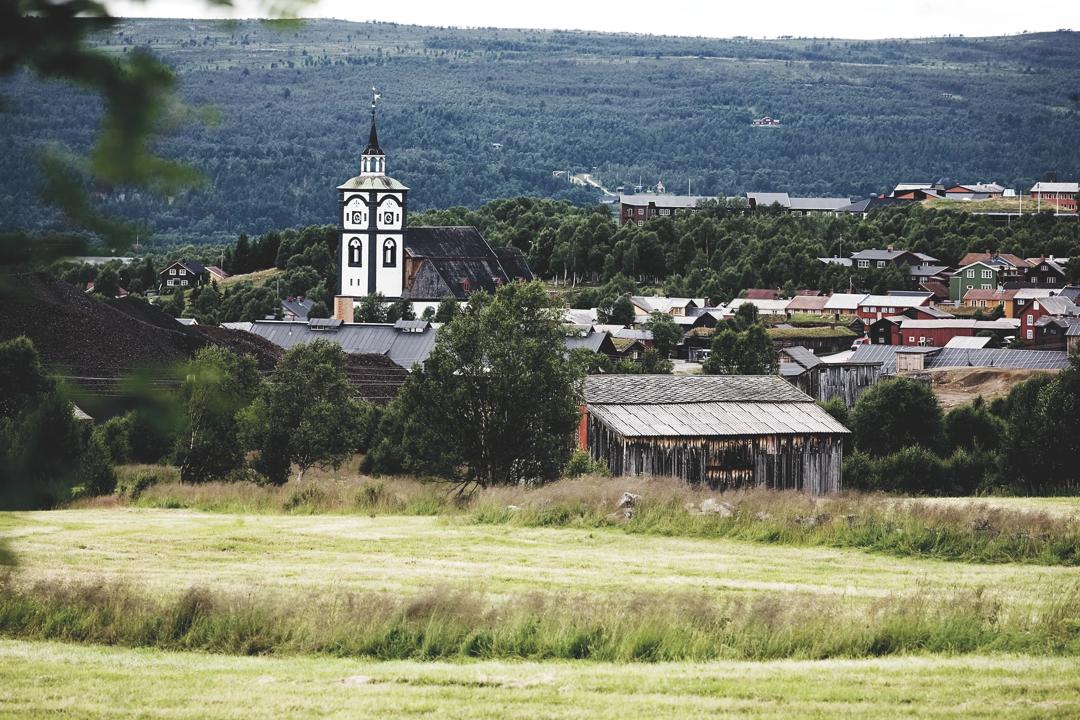
Røros er blitt landets ubestridte hovedstad for lokal, økologisk mat. Her er fem årsaker til at de har lykkes.
BI Business Review
Blir ansatte mer kreative i kreative kontorer der de kan leke og ha det gøy?
BI Business Review
Kreative møter og prosesser bør være digitalfrie soner. Kritiske møter bør gjennomføres i rom som egner seg for det.
BI Business Review
Hvordan kan film og filmpolitikk bidra til å skape større oppmerksomhet rundt merkevaren Norge?