Per Espen Stoknes
Førsteamanuensis
Institutt for ledelse og organisasjon
Førsteamanuensis
Institutt for ledelse og organisasjon
Artikkel Per Espen Stoknes, David Collste, Sarah E. Cornell, Ben Callegari, Nathalie Spittler, Owen Gaffney, Jorgen Randers (2025)
How can wellbeing for all be improved while reducing risks of destabilising the biosphere? This ambition underlies the 2030 Agenda but analysing whether it is possible in the long-term requires linking global socioeconomic developments with life-supporting Earth systems and incorporating feedbacks between them. The Earth4All initiative explores integrated developments of human wellbeing and environmental pressures up to 2100 based on expert elicitation and an integrated global systems model. The relatively simple Earth4All model focuses on quantifying and capturing some high-level feedback between socioeconomic and environmental domains. It analyses economic transformations to increase wellbeing worldwide and increase social cohesion to create conditions that are more likely to reduce pressures on planetary boundaries. The model includes two key novelties: a social tension index and a wellbeing index, to track societal progress this century. The scenarios suggest that today's dominant economic policies are likely to lead to rising social tensions, worsening environmental pressures, and declining wellbeing. In the coming decades, unchecked rising social tensions, we hypothesise, will make it more difficult to build a large consensus around long-term industrial policy and behavioural changes needed to respect planetary boundaries. We propose five extraordinary turnarounds around poverty, inequality, empowerment, energy and food that in the model world can shift the economy off the current trajectory, improve human wellbeing at a global scale, reduce social tensions and ease environmental pressures. The model, the five (exogenous) turnarounds and the resulting two scenarios can be used as science-policy boundary objects in discussions on future trajectories.
Artikkel Per Espen Stoknes, Iulie Aslaksen, Ulrich Goluke, Jørgen Randers, Per Arild Garnåsjordet (2023)
The global energy transition from fossil to low-carbon energy challenges the future of the Norwegian petroleum sector, a major factor in the country's economy, now facing financial climate risk and long-term declining demand, particularly for gas to the EU. What energy policies can assist transition into a low-carbon society? We explore three investment scenarios for the Norwegian offshore energy sector from 2020 to 2070: 1) Business as usual, 2) Increasing cash-flow by harvesting existing petroleum fields and cutting investments (Harvest-and-Exit), or 3) Rebuilding with green offshore energy investments. In a new economic model, we compare impacts on key macro- and sector-economic variables. We find that rebuilding by investing moderately in green offshore energy production could reverse the extra job decline that a quicker phase-out of petroleum investments would incur. The impacts on the Norwegian sovereign wealth fund - Government Pension Fund Global - and on gross domestic product (GDP) per capita are insignificant to 2050 and positive by 2070. The simulated investments and economic results can be compared with observations to constitute forward-looking indicators for energy transitioning in producer countries.
Artikkel Per Espen Stoknes, Elisa Dahl Walderhaug (2023)
Hvordan står det egentlig til med klimaregnskapene i norske bedrifter? Artikkelen gir en kort status på dagens utbredelse og drøfter formål, metoder og praksis for klimaregnskap og klimamål med henblikk på konkurransefortrinn. I denne artikkelen anvender vi en sammenfattende kvalitativ tilnærming som baserer seg på en kombinasjon av mange ulike typer data, datakilder, internasjonale veiledere og standarder, og reflekterer over egne erfaringer på feltet i Norge. På den bakgrunn drøfter vi hvilke utfordringer selskaper står overfor fremover med hensyn til rapportering, klimamålsettinger og strategier for grønn vekst.
Artikkel Taran Fæhn, Per Espen Stoknes (2023)
This paper assesses the relevance and outcome of involving a transdisciplinary group of stakeholders in a scenario-building research project. The scenarios describe plausible external, long-term conditions with the aim to improve the knowledge basis of a national (Norwegian) government pursuing climate policy targets for 2030 and 2050 under uncertainty. The scenario process has two phases with quite different roles for the participants. In the first, the aim is to create broad engagement and participation in exploring narratives for how key external conditions might develop and form premises for the national climate strategies for Norway. The ambition in this phase is to deduce a handful of wide-ranging and distinctly different, qualitative scenarios. The second phase is devoted to translating the narratives into quantitative projections for the Norwegian economy and greenhouse gas emissions by means of linking global and national largescale models. We claim that research projects building and using scenarios have significant potential to benefit from involving a broad stakeholder group in developing qualitative narratives. The second phase involves complex quantitative simulations. In order to provide scientific rigor and credibility to the scenarios, this phase primarily calls for scholars with technical skills, knowledge on the research frontier and modelling experience. Nevertheless, later use of these scenarios in numerical policy studies can gain from resumed researcher-stakeholder interaction.
Bok Sandrine Dixson-Declève, Owen Gaffney, Jayati Ghosh, Jorgen Randers, Johan Rockström, Per Espen Stoknes (2022)
Artikkel Per Espen Stoknes, Olav Bjerke Soldal, Sissel Hansen, Ingvar Kvande, Sylvia Weddegjerde Skjelderup (2021)
The recent rise in climate concern among citizens worldwide is coinciding with a rising interest in agricultural climate solutions. The future scaling-up of these solutions, however, requires more knowledge about the mitigation potential, costs and financing options, including crowdfunding (CF). Our objective is to explore the driving factors behind the public’s willingness to pay for crowdfunded climate mitigation projects at the farm level. In this study, four mitigation options from the perspective of farmers were identified: solar panels on the barn roof, biogas from animal manure, drag hoses for improved manure dispersal, and the addition of biochar to soils. The study investigates the optimal characteristics of crowdfunding campaigns to finance such mitigation measures. The most influential factors on the respondents’ WTP is neither climate concern nor proximity, but instead the knowledge regarding CF, combined with how comprehensible and salient the suggested measure is. The main implications are that future projects that aim to achieve broad participation in CF campaigns need to communicate well, to improve both public knowledge of the funding mechanism (CF) itself and the comprehensibility and salience of the agricultural measure.
Bok Per Espen Stoknes (2021)
Artikkel David Collste, Sarah E. Cornell, Jørgen Randers, Johan Rockström, Per Espen Stoknes (2021)
Transformation of the world towards sustainability in line with the 2030 Agenda requires progress on multiple dimensions of human well-being. We track development of relevant indicators for Sustainable Development Goals (SDGs) 1–7 against gross domestic product (GDP) per person in seven world regions and the world as a whole. Across the regions, we find uniform development patterns where SDGs 1–7 – and therefore main human needs – are achieved at around US$15,000 measured in 2011 US$ purchasing power parity (PPP).
Leder Per Espen Stoknes (2020)
Leder Per Espen Stoknes, Bjørn Arild Thon (2020)
Bok Per Espen Stoknes (2020)
Artikkel Per Espen Stoknes (2019)
Sett at du og jeg og hele organisasjonen vi jobber med, tar klimaproblemet på alvor. Hvordan kan et selskap, en sektor eller et helt land dokumentere at vi arbeider i tråd med klimamålet i Paris-avtalen? Hvordan kan man rapportere på en måte som ikke bare grønnvasker enkeltinitiativer, men som viser at man både skaper mer verdier og samtidig yter sin rettferdige andel på hele klima- og miljøfeltet? Dette er spørsmålet som artikkelen besvarer gjennom å gi en kort innføring i sammenhengen mellom grønn vekst og vitenskapsbaserte mål (science-based targets). Vi finner at karbonproduktiviteten må vokse med mer enn fem prosent per år for at vi skal ha ekte grønn vekst.
Artikkel Jørgen Randers, Johan Rockström, Per Espen Stoknes, Ulrich Golüke, David Collste, Sarah E. Cornell, Jonathan F. Donges (2019)
The world agreed to achieve 17 Sustainable Development Goals by 2030. Nine planetary boundaries set an upper limit to Earth system impacts of human activity in the long run. Conventional efforts to achieve the 14 socio-economic goals will raise pressure on planetary boundaries, moving the world away from the three environmental SDGs. We have created a simple model, Earth3, to measure how much environmental damage follows from achievement of the 14 socio-economic goals, and we propose an index to track effects on people's wellbeing. Extraordinary efforts will be needed to achieve all SDGs within planetary boundaries.
Artikkel Per Espen Stoknes, Johan Rockström (2018)
Over the last decade, green growth policies have drawn increasing interest. OECD, UNEP, the World Bank and the EC have had several initiatives on the issue, and the Nordic countries have a special program on it. Definitions and indicator sets have been developed, though critics have pointed out that most initiatives amount to little more than a greenwashing of conventional economic growth. The paper proposes and discusses two definitions of green growth, one weak and one strong. Both build on resource- and carbon productivity measures, but whereas the weak definition requires absolute decoupling, the strong or “genuine green growth” requires sufficient decoupling to achieve science based targets for planetary boundaries. The approach is tested at country levels, starting with the climate boundary, by analyzing progress on carbon productivity (“CAPRO”) in Nordic countries since 2000. Results show that so far, among Nordic countries, Sweden, Finland and Denmark have achieved genuine green growth, while Norway has not. Implications for policy and communication of green growth are discussed.
Kapittel Per Espen Stoknes (2017)
Artikkel Åshild Lappegard Hauge, Anders-Johan Almås, Cecilie Flyen, Per Espen Stoknes, Jardar Lohne (2017)
To reduce future damages on buildings and infrastructure, and prepare society for the coming climate challenges, in recent years numerous user guides have been developed. The objective of this study is to provide the first overview and analysis of, the characteristics of the existing guidance material for the climate adaptation of the built environment in Norway. 84 user guides and web portals are mapped and analysed, focusing on target groups and topics. The results are viewed in relation to qualitative interviews with experts responsible for promoting climate adaptation. A large share of the guidance material communicates climate adaptation at a general level rather than in-depth practical measures. The interviews confirm that there is an overwhelming amount of guidance material, and it is suggested that this may cause confusion and uncertainty among users. The study and its findings are placed within a context of the climate services literature, and ‘‘user guides” are understood as a type of ‘‘climate services product”. A main conclusion is that the abundance of user guides does not automatically lead to better climate adaptation. Too few user guides for climate adaptation sufficiently secure easily accessible information on practical measures. The guides are not broadly utilised, the language and length of the texts are sometimes problematic, and the target groups are often wide or not specified. The results presented may be used in order to develop improved user guides for climate adaptation in societies with similar climate and societal challenges to those in Norway.
Akademisk bok Per Espen Stoknes, Kjell Arnold Eliassen (2015)
Kapittel Per Espen Stoknes (2015)
Artikkel Per Espen Stoknes (2014)
Climate science has provided ever more reliable data and models over the last 20–30 years, thereby indicating increasingly severe impacts in the coming decades and centuries. Nonetheless, public concern for climate change and the issue's perceived importance has been declining over the past few decades, thus giving less public support for ambitious climate policies. Conventional climate communication strategies have failed to resolve this “climate paradox.” This article reviews research on the psychology of the climate paradox, and rethinks new emerging strategies for how to resolve it in the coming decades.
Artikkel Mads Greaker, Per Espen Stoknes, Knut H. Alfsen, Torgeir Ericson (2013)
Agenda 21 required countries to develop and regularly update a national set of indicators for sustainable development. Several countries now have such sets also including separate indicators for climate change. Some of these indicators typically report global concentration of green house gases in the atmosphere or time series for global temperatures. While such indicators may give the public information about the state of the global climate, they do not provide a benchmark which makes it possible for the public to evaluate the climate policy of their government. With Kantian ethics as our point of departure, we propose a benchmark for national climate policy. The benchmark is that each nation state should act as if a global treaty on climate change were in place. This would require each nation state to carry out all green house gas mitigation projects below a certain cost. Furthermore, it would require each nation to keep their national green house gas emissions including acquisitions of emission permits from other countries within a certain limit. Both measures are relatively easy to track and can thus serve as indicators.
Kronikk Per Espen Stoknes (2023)
Deltakelse i media Per Espen Stoknes (2023)
Kronikk Per Ingvar Haukeland, Per Espen Stoknes, Tom Kappfjell, Thoralf Henriksen (2022)
Deltakelse i media Gaute Einevoll, Per Espen Stoknes (2021)
Intervju Per Espen Stoknes, Simen Tveitereid (2020)
Intervju Per Espen Stoknes, Andreas Espegren Masvie (2020)
Intervju Per Espen Stoknes (2020)
Intervju Frid Kvalpskarmo Hansen, Per Espen Stoknes (2020)
I denne episoden av Svalkast skal klimapsykolog Per Espen Stoknes hjelpe alle oss som har kjent klimadepresjonen lure i hjernens mørke kroker. Han vil dessuten gi svar på spørsmålet mange stiller seg: Hvorfor skjer det så lite når vi vet så mye om klimaendringene?
Deltakelse i media Per Espen Stoknes (2019)
Intervju Per Espen Stoknes (2019)
Kronikk Per Espen Stoknes (2019)
Intervju Per Espen Stoknes (2019)
There's no greater threat to humanity than climate change. What can we do to stop the worst consequences? This hour, TED speakers explore how we can save our planet and whether we can do it in time.
Intervju Eirik Tangeraas Lygre, Kjersti Fløttum, Per Espen Stoknes (2019)
Intervju Per Espen Stoknes (2019)
Intervju Per Espen Stoknes, Sara Wanous (2018)
Intervju Per Espen Stoknes, Ylva Larsson (2018)
Intervju Per Espen Stoknes, Anne Siri Renå (2018)
Intervju Per Espen Stoknes, Markus Lutteman (2018)
Kronikk Johan Rockström, Jørgen Randers, Per Espen Stoknes (2018)
Kronikk Jørgen Randers, Per Espen Stoknes (2018)
Kronikk Per Espen Stoknes (2018)
Intervju Per Espen Stoknes (2018)
Intervju Jill Suttie, Per Espen Stoknes (2018)
Intervju Fergal Byrne, Per Espen Stoknes (2018)
Dr. Per Espen Stoknes is a distinguished psychologist and economist and chair of the Centre for Green Growth at the Norwegian Business School. He is a pioneer in the field of climate change psychology, which he has studied for twenty years–and the author of numerous books including the acclaimed What We Think About When We Try Not to Think About Global Warming (2015). Per is also a serial entrepreneur and co-founder of the clean tech company GasPlas. In this revealing interview, Per unpacks the psychology of climate change communications –and why increased scientific certainty on this issue has only entrenched apathy among much of the general public. He outlines the five key psychological barriers impeding climate change action, explains why gloomy narratives about climate change are ineffective, and counsels communication that takes into account people’s psychology—for example, stressing the wider societal benefits of climate action through “positive framing”. Stoknes also highlights the dangers assuming the general public reach decisions on a rational basis, highlighting the influence of the mass media’s powerful distortions of climate issues, such as the “ClimateGate” debacle of 2009
Intervju Per Espen Stoknes, Anne Karin Jortveit (2018)
Kronikk Per Espen Stoknes, Arnold Schwarzenegger (2015)
Deltakelse i media Per Espen Stoknes (2015)
Intervju Per Espen Stoknes (2015)
Intervju Helga Flesche Kleiven, Per Espen Stoknes, Klaus Mohn, Turid Furdal (2013)
Bokkapittel Per Espen Stoknes (2025)
Rapport Beniamino Callegari, Per Espen Stoknes (2023)
Artikkel Per Espen Stoknes, Iulie Aslaksen, Ulrich Golüke, Jørgen Randers, Per Arild Garnåsjordet (2021)
The global energy transition from fossil to low-carbon energy challenges the future of the Norwegian petroleum sector, a major factor in the country’s economy, now facing financial climate risk and longterm declining demand, particularly for gas to the EU. What energy policies can assist the transition into a low-carbon society? We explore three investment scenarios for the Norwegian offshore energy sector from 2020 to 2070: 1) Business as usual, 2) Increasing cash-flow by harvesting existing petroleum fields and cutting investments (Harvest-and-Exit), or 3) Rebuilding with green offshore energy investments. In a new economic model, we compare impacts on key macro- and sectoreconomic variables. We find that investing moderately in green offshore energy production can reverse the extra job decline that a quicker phase-out of petroleum investments would incur. The impacts on the Norwegian sovereign wealth fund - Government Pension Fund Global - and on gross domestic product (GDP) per capita are insignificant to 2050 and positive by 2070. The simulated investments and economic results can be compared with observations to constitute forward-looking indicators of Norway's energy transitioning.
Rapport Pia Otte, Natalia Mæhle, Sissel Hansen, Maja Farstad, Olav Bjerke Soldal, Per Espen Stoknes, Catherine Banet (2021)
Rapporten retter seg mot personer, organisasjoner eller bedrifter, som kan kommersialisere og implementere forskningsfunnene. Målgruppen er bred og omfatter blant annet landbruksorganisasjoner, banker, folkefinansieringplattformer, og reiseselskap. Rapporten inneholder en oppsummering av utvikling og design av konseptet COOLCROWD for implementeringen i det norske samfunnet.
Artikkel Per Espen Stoknes, Knut Ivar Karevold, Gry Stålsett (2020)
Rapport Per Espen Stoknes, Olav B. Soldal, Sylvia Weddegjerde (2020)
This report presents the first main deliverable of work package 4 in the Coolcrowd project, an international research project funded by the Research Council of Norway. A national survey was undertaken with a representative sample of 1500 Norwegians during February 2020, based on the findings from three focus groups. The survey finds that overall, there is a low level of knowledge about crowdfunding in the Norwegian public. Yet, a large proportion of the public indicates interests in supporting measures to combat climate change in agriculture, through crowdfunding. Of four possible crowdfunding model the most popular is donations, i.e. give directly to the farms. The most trustworthy organisation to operate crowdfunding campaigns for the agricultural sector are research institutes. Of four climate solutions, respondents indicate that solar panels on barns are the most popular climate technology, for which respondents indicate an average willingness to pay of 186 NOK through a crowdfunding campaign. On average each respondent is willing to pay 161 NOK each for any climate measure. About half of the sample say it is important that the supported measures have proven climate effects. Still, one fifth indicate wiliness to support novel climate measures, not yet tested at large scale in Norwegian agriculture. Roughly 50% indicate that they prefer to support farmers in their local neighbourhood.
Konferanseforedrag Per Espen Stoknes (2020)
Artikkel Per Espen Stoknes (2019)
Foredrag Per Espen Stoknes (2019)
Konferanseforedrag Per Espen Stoknes (2019)
Rapport Per Espen Stoknes, Randers Jørgen, Johan Rockström, Jørgen Randers, Ulrich Golüke, David Collste, Sarah E. Cornell (2018)
If the world’s nations continue with the same efforts as in the recent decades we will not achieve SDGs by 2030, nor 2050. By 2030, in the business-as-usual scenario, the world’s success score on SDGs will be only 10 out of 17, up from 9 in 2015. The main problems are that satisfying the social SDGs with conventional policy tools will lead to very large human footprints in terms of resource use and pollution outputs, and to increasing inequity. The state of the Earth’s planetary boundaries (PBs) will be further in the red, high-risk zone particularly with regards to global warming, biodiversity loss, air pollution and toxic entities in nature. There is high risk for pushing the Earth’s life supporting systems beyond irreversible trigger-points by 2050.
Rapport Taran Fæhn, Per Espen Stoknes (2018)
This report synthesises the results of a workshop on explorative scenarios for the global social, economic, technological and political development from 2020 to 2050. The 19 participants included national and international researchers and experts in the transdisciplinary Forum of the project – see http://www.ssb.no/en/forskning/energi-og-miljookonomi/klimapolitikk-ogokonomi/smart-paths-smart-paths-and-costly-detours-towards-a-sustainable-lowemission-society. The work resulted in a handful of alternative, internally consistent, qualitative scenarios for the forthcoming global social, economic, technological, and political development. These will serve as a starting point for the numerical scenarios to be generated and analysed in the project SMART PATHS (Research Council of Norway #268200). Thanks to workshop participants for this work being possible and for valuable input to this report. We also appreciate the comments on earlier drafts from Kristine Grimsrud and Cathrine Hagem and are grateful for research grants from the Research Council of Norway (Klimaforsk #268200).
Bokkapittel Per Espen Stoknes (2017)
Artikkel Per Espen Stoknes (2015)
Konferanseforedrag Per Espen Stoknes (2015)
Fagbok Per Espen Stoknes (2015)
Arbeidsnotat Mads Greaker, Per Espen Stoknes, Knut H. Alfsen, Torgeir Blikseth Ericson (2012)
Agenda 21 required countries to develop and regularly update a national set of indicators for sustainable development. Several countries now have such sets also including separate indicators for climate change. Some of these indicators typically report global concentration of green house gases in the atmosphere or time series for global temperatures. While such indicators may give the public information about the state of the global climate, they do not provide a benchmark which makes it possible for the public to evaluate the climate policy of their government. With Kantian ethics as our point of departure, we propose a benchmark for national climate policy. The benchmark is that each nation state should act as if a global treaty on climate change were in place. This would require each nation state to carry out all green house gas mitigation projects below a certain cost. Furthermore, it would require each nation to keep their national green house gas emissions including acquisitions of emission permits from other countries within a certain limit. Both measures are relatively easy to track and can thus serve as indicators.
Lærebok Per Espen Stoknes (2009)
Fagbok Per Espen Stoknes (2007)
| År | Akademisk institusjon | Grad |
|---|---|---|
| 2011 | University of Oslo | Ph.D Dr. Philos. |
| 1994 | University of Oslo | Master Cand. Psychol. |
| År | Arbeidsgiver | Tittel |
|---|---|---|
| 2011 - Present | BI Norwegian Business School | Ass professor |
| 2000 - Present | Stoknes Futures AS | Owner |
| 2012 - 2014 | MetalPlas AS | Chairman, project leader |
| 2008 - 2013 | GasPlas AS | Chairman, Co-founder, head of research |
| 2006 - 2012 | BI Norwegian Business School | Adjunct Senior Lecturer |
| 2009 - 2011 | BI Norwegian Business School | Researcher |
| 2001 - 2008 | Norwegian Inst. Expressive arts & communication | Head of studies Coaching |
| 2000 - 2005 | BI Norwegian Business School | Industrial Professor II |
BI Business Review
Både Equinor sin toppledelse og ikke minst våre politikere må begynne å løfte blikket.
BI Business Review
Klimaendringene skjer fortere enn forutsett. Et internasjonalt team av forskere og økonomer anbefaler fem store snuoperasjoner for å skape en bedre fremtid.
BI Business Review
Landbruket må tilpasse seg økt klimarisiko og overgangsrisiko, men landbruksmidlene bidrar i for liten grad til klimainvesteringer i ny infrastruktur. Kan folkefinansiering føre til flere klimatiltak i det norske landbruket?
BI Business Review
Lytt til podkast - Næringslivet er en viktig brikke i bærekraftig omstilling, men hva gjør de for å bli mer bærekraftige?
BI Business Review
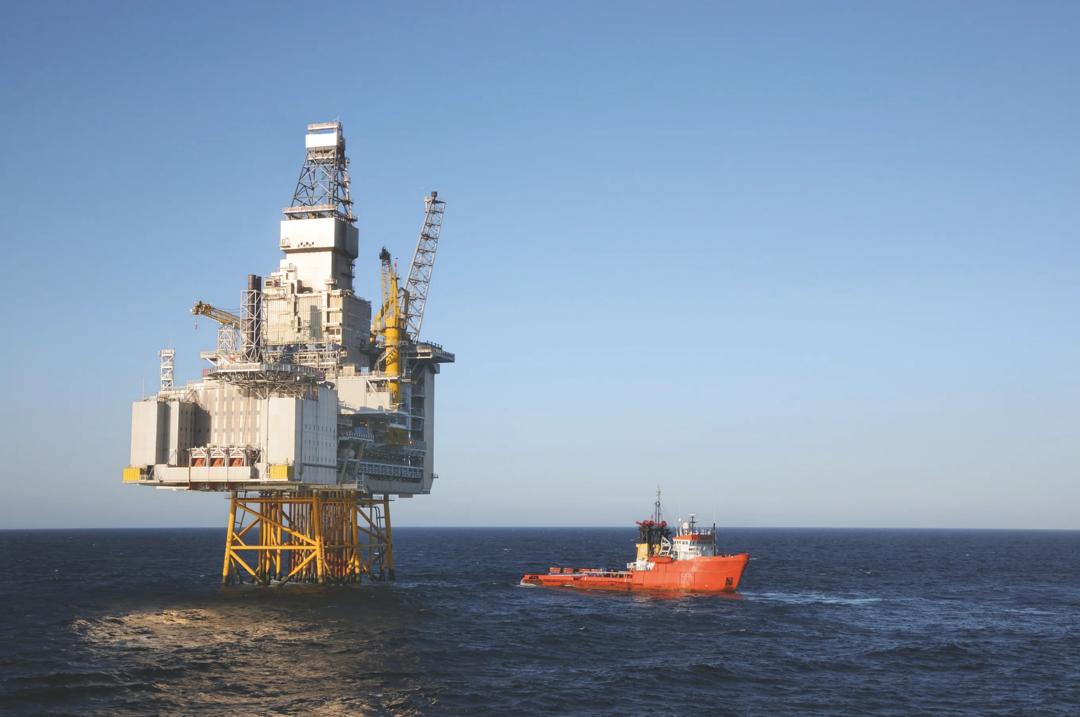
Grønn satsing offshore i stedet for nye oljeinvesteringer vil trygge velferden, ikke redusere den.
BI Business Review
Vekstparadokset oppstår fordi samfunnet trenger mer økonomisk vekst, samtidig som jordkloden er full og klimaet på tippepunktet. Kan dette løses?

BI Business Review
Kriser kan mobilisere ekstra ressurser i oss, men hvordan kan de brukes til å utvikle organisasjoner for grønn vekst?

BI Business Review
Slik kan vi komme tilbake til en bedre verden etter krisa.
BI Business Review
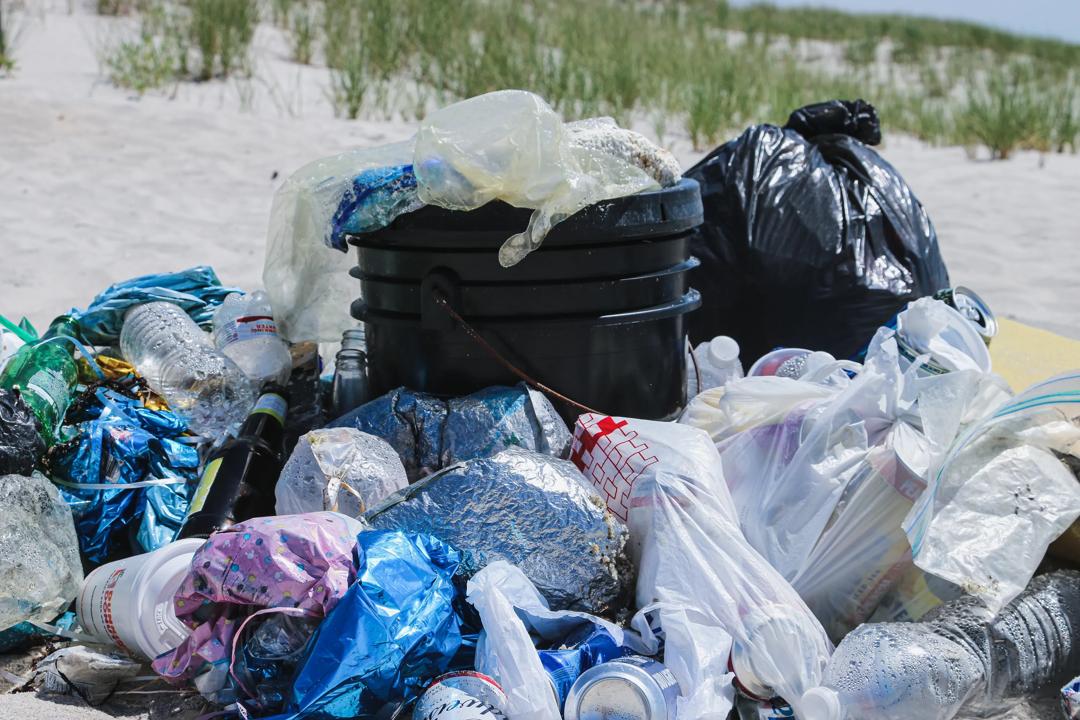
Norske ledere må raskt bygge nye verdikjeder og utnytte nye forretningsområder for å holde tritt med resten av Europa i sirkulærøkonomien.
BI Business Review
Europakommisjonen er i gang med en omfattende prosess for å stake ut en kurs for Europas forsknings- og innovasjonspolitikk. Per Espen Stoknes sitter i styret som skal foreslå overordnede mål for hvordan vi skal lykkes med nødvendige klima- og samfunnsendringer.
BI Business Review
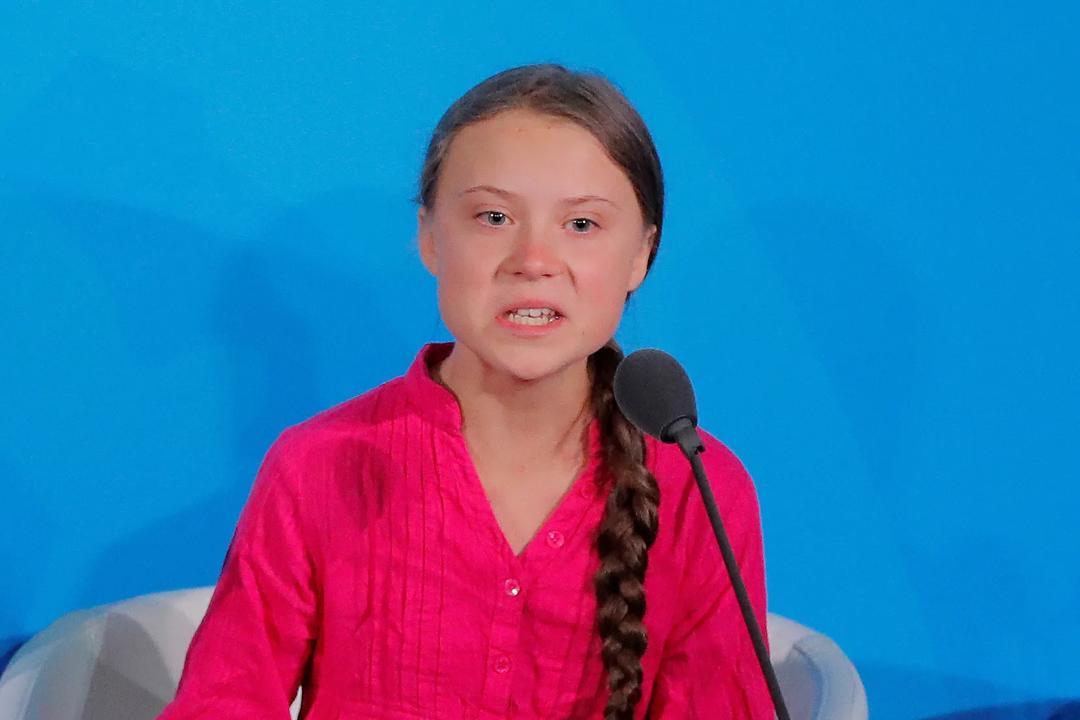
Greta Thunberg sin fremtoning og fremføring er unik, og kan ikke eksakt kopieres av andre.
BI Business Review
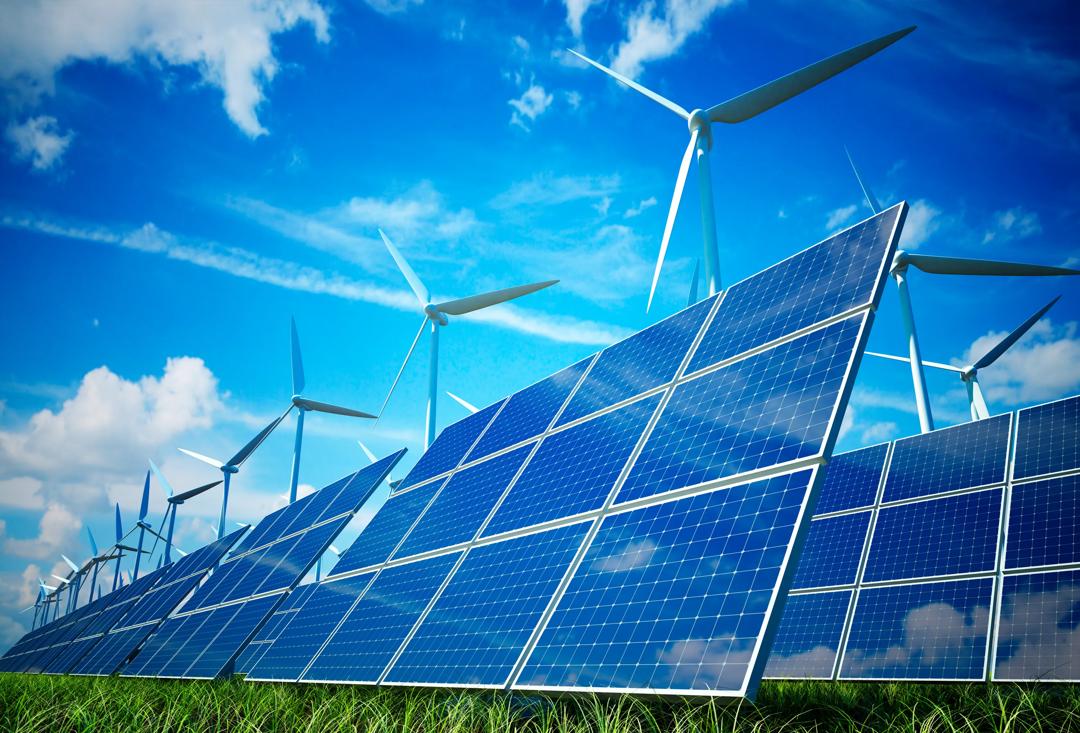
Hva hvis det viser seg at vi har en veldig solrik fremtid foran oss, og mye av klimabekymringene vi har i dag er hensiktsløse?